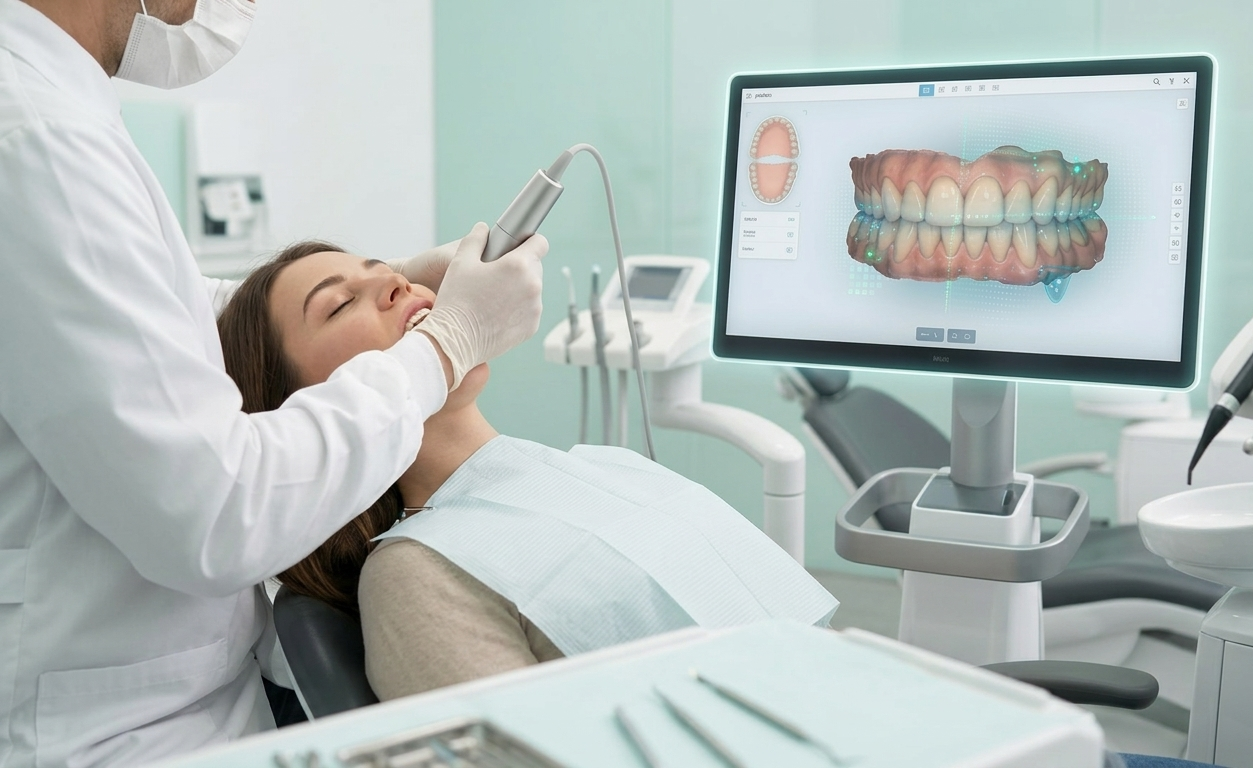
A beautiful smile is about more than the colour and shape of your teeth. The way your upper and lower teeth meet — your bite, or occlusion — plays a quiet but decisive role in how a cosmetic result looks, feels, and lasts. When the bite is balanced, restorations such as veneers and crowns sit comfortably, wear evenly, and stay intact for years. When it is off, even the most carefully crafted smile can chip, loosen, or feel uncomfortable.
This guide explains what bite alignment is, why it matters in cosmetic dentistry, and how a thorough assessment protects your investment in a new smile.
What is bite alignment?
Bite alignment, known clinically as occlusion, describes how your teeth contact each other when you close your mouth, chew, and move your jaw from side to side. In a healthy bite, the forces of chewing are distributed evenly across many teeth, the jaw joints move smoothly, and no single tooth carries more pressure than it should.
When teeth do not meet as they should, the result is called malocclusion. It can be subtle — a few teeth meeting early — or more pronounced, affecting comfort, function, and appearance.
Common types of bite issues
- Overbite — the upper front teeth overlap the lower teeth more than they should.
- Underbite — the lower teeth sit in front of the upper teeth.
- Crossbite — some upper teeth close inside the lower teeth rather than outside.
- Open bite — the front teeth do not touch when the back teeth are closed.
- Crowding or spacing — teeth that are rotated, overlapped, or separated by gaps.
Why bite alignment matters in cosmetic dentistry
Cosmetic dentistry reshapes the surfaces and edges of teeth that come into contact every time you bite. If those contacts are uneven, the changes can introduce new pressure points. A bite-focused approach makes sure that aesthetic improvements also function well over time.
Protecting the longevity of restorations
Veneers, crowns, and bonding are durable, but they perform best when chewing forces are shared evenly. An unbalanced bite concentrates stress on specific teeth, which can lead to chipping or premature wear. Checking the bite before and after treatment helps restorations last.
Even, comfortable function
A smile should feel as good as it looks. When the bite is balanced, you can chew comfortably and your jaw muscles work without strain. Patients often notice that addressing the bite relieves tension they had quietly grown used to.
A natural, lasting aesthetic
The position of the teeth and the way they meet influence the proportions of the smile and the support of the lips. Designing a smile with the bite in mind produces results that look natural from every angle, not just head-on.
How bite issues affect specific cosmetic treatments
Veneers and crowns
Before placing porcelain veneers or crowns, the bite is studied so the new surfaces meet evenly. Where teeth are significantly out of position, aligning them first can allow more conservative preparation and a more harmonious final result. Dr. Elias Abou Tayeh often plans veneer cases around the bite so the finished smile is both beautiful and stable.
Clear aligners
Clear aligners are frequently used to correct mild to moderate bite and crowding issues. By moving teeth into better positions first, aligners can lay the foundation for cosmetic work — sometimes reducing how much restorative treatment is needed at all.
Dental implants
For dental implants, bite balance is essential. An implant does not have the natural cushioning of a tooth root, so even, well-distributed contact helps protect the implant and the surrounding bone over the long term.
Signs your bite may be misaligned
A professional assessment is the only way to be certain, but several everyday signs can point to a bite worth examining:
- Teeth that feel like they touch unevenly when you close.
- Jaw tension, clicking, or fatigue, particularly in the morning.
- Frequent headaches around the temples.
- Flattened, chipped, or worn tooth edges.
- Difficulty chewing certain foods comfortably.
- Teeth that have shifted or developed new gaps over time.
How a balanced bite is assessed and planned
Modern cosmetic dentistry relies on careful diagnosis before any treatment begins. A bite assessment may include examining how the teeth meet, evaluating the jaw joints and muscles, and using digital tools to capture detailed records.
With digital smile design and intraoral scanning, the relationship between your teeth, bite, and facial features can be studied precisely. This lets the dental team plan changes virtually and preview the outcome before treatment starts, so aesthetics and function are considered together rather than separately. Dr. Milena Ilieva focuses on the restorative detail that keeps a corrected bite healthy for the long term.
Treatments that address bite and beauty together
Because bite and appearance are connected, the best results usually come from a coordinated plan. Depending on your needs, that might combine:
- Aligners or orthodontic movement to correct tooth position and bite.
- Veneers, crowns, or bonding to refine shape, colour, and proportion.
- Restoration of worn or damaged teeth to rebuild even contacts.
- Ongoing maintenance to protect the result, such as a night guard if grinding is a factor.
You can see examples of completed cases in our smile gallery and read about other patients' experiences on our patient reviews page.
Frequently Asked Questions
Can cosmetic dentistry fix a bad bite?
Cosmetic treatments improve the appearance of teeth, and many bite issues can be corrected as part of a comprehensive plan. Mild misalignment is often addressed with clear aligners, while more complex cases may combine alignment with restorative work. A thorough assessment determines the right approach for you.
Do veneers change your bite?
Well-planned veneers are designed to fit your bite rather than disrupt it. The dentist studies how your teeth meet and adjusts the veneers so contacts stay even. If your bite needs correcting, that is usually addressed before or alongside the veneers.
Is a misaligned bite only a cosmetic concern?
No. Beyond appearance, an unbalanced bite can contribute to uneven tooth wear, jaw discomfort, and added stress on restorations. Addressing it supports both the health and the longevity of your smile.
How do I know if my bite needs attention before cosmetic treatment?
The clearest way is a professional evaluation. During a consultation, the dental team checks how your teeth meet and whether any bite factors should be managed first. Signs such as worn edges, jaw tension, or teeth that touch unevenly are worth mentioning.
Which treatments help with both alignment and appearance?
Clear aligners are a popular option because they improve tooth position and bite while remaining discreet. Combined with veneers or bonding where needed, they can deliver a result that is both balanced and beautiful.
Plan a smile that looks and feels right
A lasting cosmetic result starts with a healthy, balanced bite. If you are considering veneers, aligners, implants, or a full smile makeover, a consultation is the best way to understand how bite alignment fits into your plan. Dr. Elias Abou Tayeh and Dr. Milena Ilieva take the time to assess both function and aesthetics so your new smile is built to last. Book an appointment to begin with a thorough, personalised assessment.