Treatment 06Microscopic endodontics · Beirut
Root canal treatment in Beirut, Lebanon
Save the tooth. Seen under the microscope.
Infected or inflamed pulp removed, the canals cleaned and sealed, and your natural tooth kept, usually in 1–2 visits under local anaesthesia.
- Precision
- Design
- Technology
- Natural beauty
- Visits
- 1–2
- Session
- 45–90 min
- Anaesthesia
- Local
In brief
A root canal is precise work deep inside a tooth. That is why it is done under the microscope.
A root canal removes infected or inflamed pulp from inside a tooth, cleans and seals the canal, and relieves the pain caused by the infection — allowing you to keep your natural tooth.
- Instruments
- Rotary endodontics
- Back teeth
- Crown planned
01 / Consultation
We listento you.
Tooth pain doesn’t always mean extraction is the only option. We start by finding out exactly what the tooth is telling us.
A root canal treats the infected nerve inside the tooth so the tooth itself can be saved.
Signs it’s time for an evaluation
- iLingering sensitivity to hot or cold
- iiSpontaneous, throbbing pain, especially at night
- iiiSwelling or a small pimple on the gum
- ivPain when biting or chewing on one side
- vTooth discolouration (greying or darkening)
- viA deep cavity or old filling causing discomfort
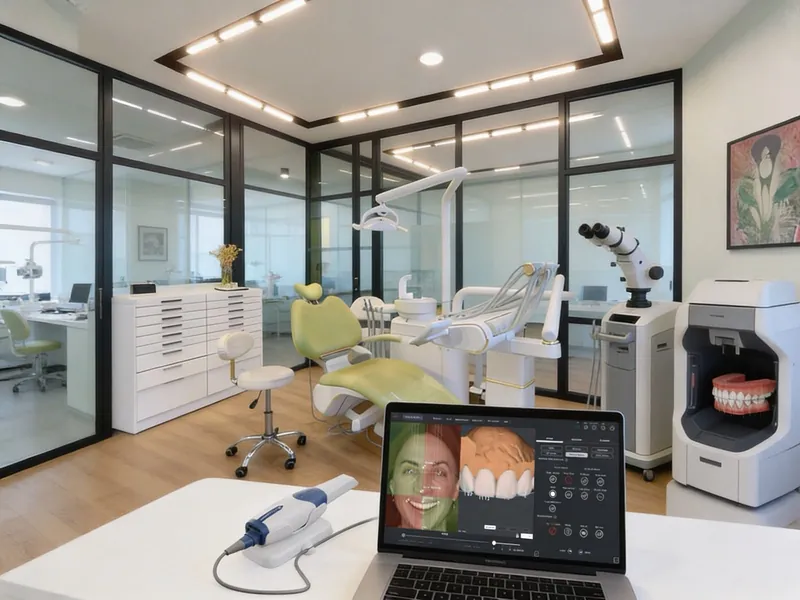
PhotographThe treatment room: scanned and planned on screen
02 / Examination
We findthe problem.
Advanced technology, guided by human aesthetic expertise.
A digital X-ray confirms the infection and shows the shape of the tooth’s root canals. The operating microscope then lets us see what the eye cannot.
Modern rotary instruments clean and shape canals more precisely and comfortably than traditional hand files.
03 / Your plan
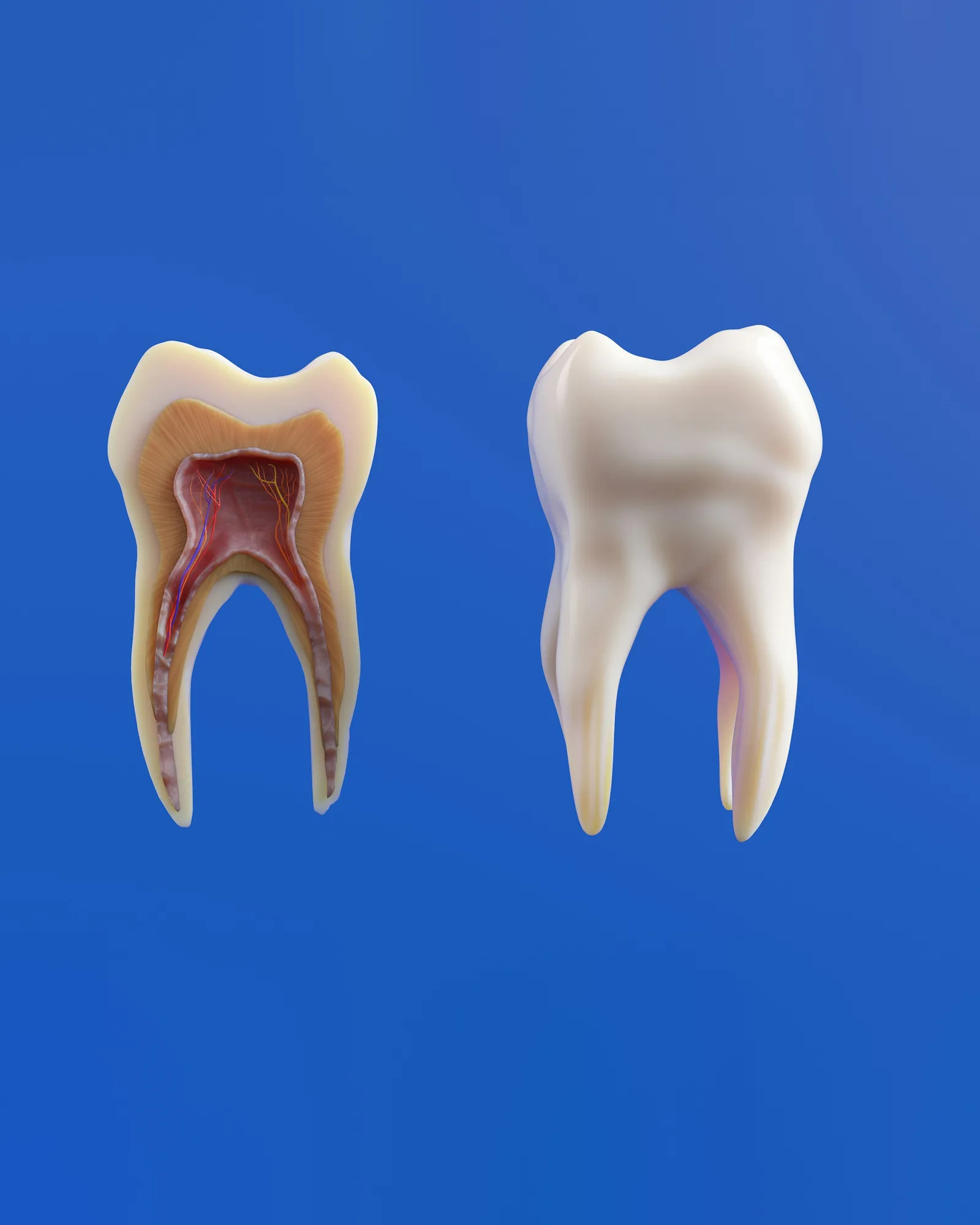
What happensinside the tooth.
From infected pulp to a sealed tooth.
Root canal treatment is the gold standard for saving a natural tooth instead of extracting it — preserving your bite and jawbone.
- 01Pulp chamberReached through a small opening in the top of the tooth.
- 02Root canalsInfected pulp removed; each canal cleaned and shaped with rotary instruments.
- 03Root tipSealed with a biocompatible material (gutta-percha) to prevent reinfection.
- 04The crownRestored with a filling or, for back teeth, a custom crown.
04 / Treatment
Cleaned, sealedand restored.
- 4.1
Accessing the canal
A small opening reaches the infected or inflamed pulp inside the root canals.
- 4.2
Cleaning and shaping
Specialised rotary instruments remove the infected pulp and shape each canal.
- 4.3
Filling the canal
The canals are filled and sealed with gutta-percha to prevent reinfection.
- 4.4
Restoration
A filling or, for back teeth, a custom crown protects and restores full chewing function.
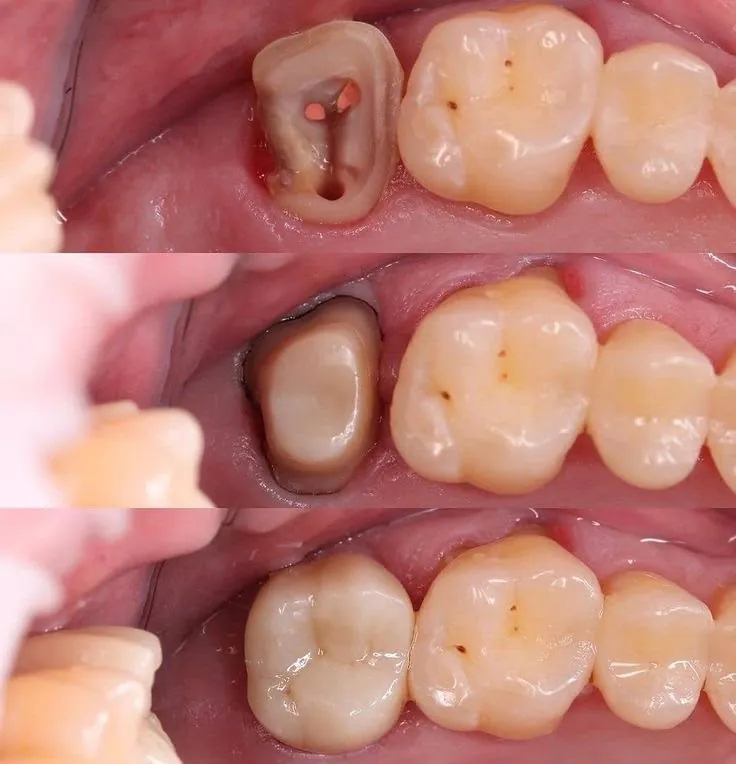
Close up · After a root canal
Rebuilt, and covered.
Once the canals are cleaned and sealed, the tooth is rebuilt and protected with an onlay or a crown.
- 01The canals, cleaned and sealed
- 02The core, rebuilt
- 03The onlay, bonded in place
05 / Results
Pain relieved,tooth kept.
The procedure relieves the pain caused by the infected nerve rather than causing it. For back teeth, we plan your protective crown at the same consultation.
“I have done several operations from cleaning and whitening to root canal and implants. Dr. Elias and Milena are very friendly and professional. They take their time to explain each case and the ways to approach the solution.”
Richard Monzer
Usually 1–2 visits
- Visit 1
Diagnosis & treatment
Digital X-ray, local anaesthesia, cleaning and shaping.
- Visit 2
Sealing
Where needed, the canals are completed and sealed.
- After
Restoration
A filling, or a custom crown for back teeth.
Questions
Root canal treatment,answered.
01How much does root canal treatment cost in Beirut?
Every plan is different, so the cost is discussed with you at your consultation, once your teeth have been examined and your treatment is planned.
02Is a root canal painful?
Modern root canal treatment is performed with the area numbed and is no more uncomfortable than a filling. The procedure actually relieves the pain caused by the infected nerve rather than causing it.
03How many visits does a root canal take?
Most root canal treatments at Mineers Smile Center are completed in 1–2 visits, depending on the tooth and severity of infection.
04What happens after a root canal — do I still need a crown?
Back teeth (molars and premolars) usually need a crown after root canal treatment to protect the weakened tooth structure from fracturing during chewing. Front teeth may only need a filling.
05What are the signs I need a root canal?
Common signs include lingering sensitivity to hot or cold, spontaneous throbbing pain, swelling or a pimple on the gum, tooth discolouration, or pain when biting down. A dental X-ray confirms the diagnosis.
Designed around you.
The sooner an infected tooth is treated, the more likely it can be saved.
Book a private consultation
Begin your journey.
The sooner an infected tooth is treated, the more likely it can be saved. Book a consultation with our Beirut team today.
- +961 3 757 127 · Phone & WhatsApp
- [email protected]
- Sodeco Square, Block B, 4th Floor, Achrafieh, Beirut
- We reply within 2 business hours. Your details remain strictly confidential.