What Is Teeth Whitening?
Teeth whitening is a cosmetic dental procedure that lightens the natural colour of your teeth by breaking down stain molecules on and within the enamel. It is one of the most widely performed aesthetic treatments in modern dentistry — and when carried out correctly, it is both safe and effective.
The active agents in most whitening treatments are hydrogen peroxide or carbamide peroxide. These compounds penetrate the enamel and oxidise the pigment compounds responsible for discolouration, restoring a brighter, more uniform appearance.
Types of Teeth Whitening
Professional In-Office Whitening
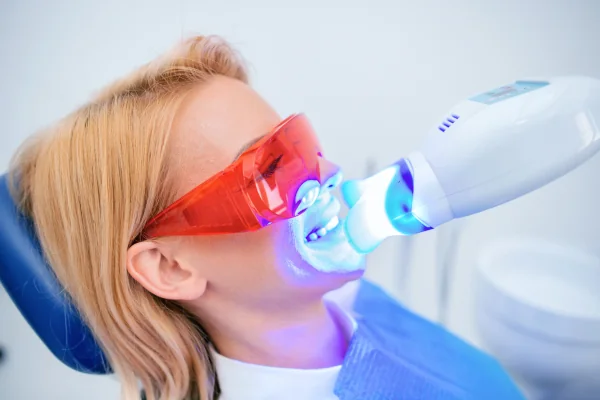
Performed at a dental clinic, in-office whitening uses a higher-concentration bleaching gel applied directly to the teeth. The procedure typically takes 60 to 90 minutes. A protective barrier is placed over the gums before treatment begins to minimise soft-tissue exposure.
Professional whitening delivers the most dramatic results in a single session and is carried out under controlled conditions — which is what makes it the safest option for most patients.
Take-Home Whitening Kits from Your Dentist
Custom-fitted whitening trays made from impressions of your teeth allow you to use a lower-concentration gel at home over a period of one to two weeks. Because the trays fit precisely, the gel stays in contact with your teeth rather than your gums, reducing the risk of irritation.
Over-the-Counter Products
Whitening strips, gels, and toothpastes are widely available without a prescription. These products contain lower concentrations of bleaching agents and typically produce more modest results. They are generally safe when used as directed, but one-size-fits-all strips can allow gel to contact the gum line, causing temporary sensitivity or irritation.
Is Teeth Whitening Safe?
For the vast majority of adults with healthy teeth and gums, teeth whitening is safe. Decades of clinical research support the use of peroxide-based bleaching agents when applied appropriately. The key word is "appropriately" — both the concentration used and how the treatment is administered matter.
The two most commonly reported side effects are:
- Tooth sensitivity — A temporary increase in sensitivity to hot, cold, or sweet stimuli during and shortly after treatment. This is caused by the bleaching agent temporarily opening dentinal tubules. It usually resolves within 24 to 48 hours.
- Gum irritation — Mild inflammation of the soft tissue if the whitening gel contacts the gums. This typically settles within a few days and is less likely with professional treatments where the gums are shielded.
These effects are temporary and do not indicate permanent damage when treatment is carried out as directed. Over-whitening — repeating treatment more frequently than recommended — can lead to enamel surface changes and prolonged sensitivity, which is why professional guidance matters.
Who Is a Good Candidate for Teeth Whitening?
Teeth whitening works best on extrinsic stains — those caused by food, drinks, and tobacco on the outer surface of the enamel — and on natural teeth. It is not suitable for everyone.
Whitening is generally appropriate if you:
- Have healthy, intact enamel with no significant decay or gum disease
- Are looking to lighten natural tooth staining from coffee, tea, red wine, or tobacco
- Have realistic expectations about the degree of whitening achievable
- Are not pregnant or breastfeeding (whitening is not recommended during this period)
Whitening is less effective or not recommended if you have:
- Intrinsic staining from antibiotics (such as tetracycline), fluorosis, or trauma — these require different cosmetic solutions
- Significant existing restorations such as crowns, veneers, or composite bonding — bleaching agents do not change the colour of restorative materials
- Active tooth decay, cracked enamel, or gum disease — these must be treated first
- Known hypersensitivity to peroxide
A dental examination before whitening ensures you are a suitable candidate and helps identify any underlying issues that should be addressed first.
How Long Do Whitening Results Last?
The longevity of whitening results depends on your diet, oral hygiene habits, and lifestyle. Results from professional whitening typically last between one and three years. Common habits that cause re-staining include frequent consumption of coffee, tea, red wine, and dark-coloured sauces, as well as tobacco use.
Maintaining results is easier with periodic touch-up treatments using your dentist-provided trays, along with consistent brushing and flossing and limiting heavy staining foods and beverages in the days immediately following treatment.
What About Whitening Toothpastes and Activated Charcoal?
Whitening toothpastes work primarily through mild abrasives that physically buff surface stains rather than bleaching the enamel. They can help maintain results after a professional treatment but are unlikely to produce meaningful whitening on their own.
Activated charcoal products have become popular on social media, but the evidence base for their safety and effectiveness is limited. Some formulations are abrasive enough to cause enamel wear with prolonged use. Before incorporating any whitening product into your routine, it is worth discussing it with your dentist.
Teeth Whitening vs Porcelain Veneers
For patients whose discolouration does not respond well to whitening — due to intrinsic staining, enamel wear, or previous restorations — porcelain veneers offer an alternative. Veneers are thin ceramic shells bonded to the front surface of the teeth that can simultaneously address colour, shape, and minor alignment irregularities. They provide a more permanent colour outcome rather than one that fades over time.
The right approach depends on your individual situation. Your cosmetic dentist can help you understand which option will produce the result you are looking for. You can also browse real patient results to get a sense of what is achievable.
Frequently Asked Questions
Does teeth whitening damage enamel?
When used as directed, professional whitening treatments do not damage enamel. Studies have not found meaningful structural changes to enamel from appropriate peroxide-based bleaching. The temporary sensitivity some patients experience is not a sign of enamel damage — it is a reversible physiological response that resolves quickly.
Can I whiten my teeth if I have crowns or veneers?
Bleaching agents do not alter the colour of crowns, veneers, bridges, or composite fillings. If you have existing restorations, whitening the surrounding natural teeth could create a colour mismatch. Your dentist can advise whether whitening makes sense in your case and, if so, whether you should consider replacing older restorations to match a new, lighter shade.
How white will my teeth get?
Results vary depending on the original shade and type of staining. Most patients achieve a noticeably brighter result, but teeth have a natural upper limit to how light they can become — determined largely by genetics and the thickness and translucency of the enamel. A consultation with your dentist will give you a realistic expectation before treatment begins.
Is professional whitening worth it compared to home kits?
Professional whitening offers more predictable results, faster outcomes, and is applied under conditions that minimise the risk of gum irritation. For patients who want a significant change in a single visit, in-office whitening is generally the more effective option. Take-home trays from your dentist combine the convenience of home use with the safety of custom-fitted trays and supervised gel concentrations.
What should I do immediately after whitening treatment?
For the first 24 to 48 hours after whitening, avoid foods and drinks that stain — coffee, tea, red wine, tomato-based sauces, and dark berries. This is the period when the enamel is most porous and susceptible to re-staining. Using a sensitive toothpaste during this period can also help manage any temporary discomfort.
Thinking About Teeth Whitening?
The best starting point is a conversation with a cosmetic dentist who can assess whether whitening is suitable for your teeth, recommend the right approach, and ensure you achieve results you will be happy with. At Mineers Smile Center, our team — including Dr. Elias Abou Tayeh — can advise on the full range of cosmetic options, from whitening to porcelain veneers and comprehensive smile makeovers.
Book a free consultation and find out what is possible for your smile.