Visiting Beirut · 11 min read
Porcelain Veneers in Lebanon: What Canadian Patients Need to Know Before Travelling for a Smile Makeover
Canadian patients: what to know about materials, planning, appointments and follow-up care before a porcelain veneer smile makeover in Beirut.
Mineers Smile Center
You are already planning a trip to Lebanon to see family. The question is whether you should come home with a new smile as well. For Canadians considering a smile makeover in Beirut, the appeal is clear: porcelain veneers planned with the digital workflow you would expect from a careful cosmetic practice at home, fitted into a trip you were taking anyway.
But the decision is about more than convenience. Materials, timing, preparation, safety, and follow-up care all decide whether treatment abroad makes sense for you. This guide covers each of them. You will learn how porcelain compares with composite, how Mineers' Testineers try-in lets you approve your result before any tooth is prepared, how two to three appointments fit into a Lebanon trip, and which red flags to watch for when evaluating any clinic abroad.
What Is a Porcelain Veneer, and Why Does the Material Matter?
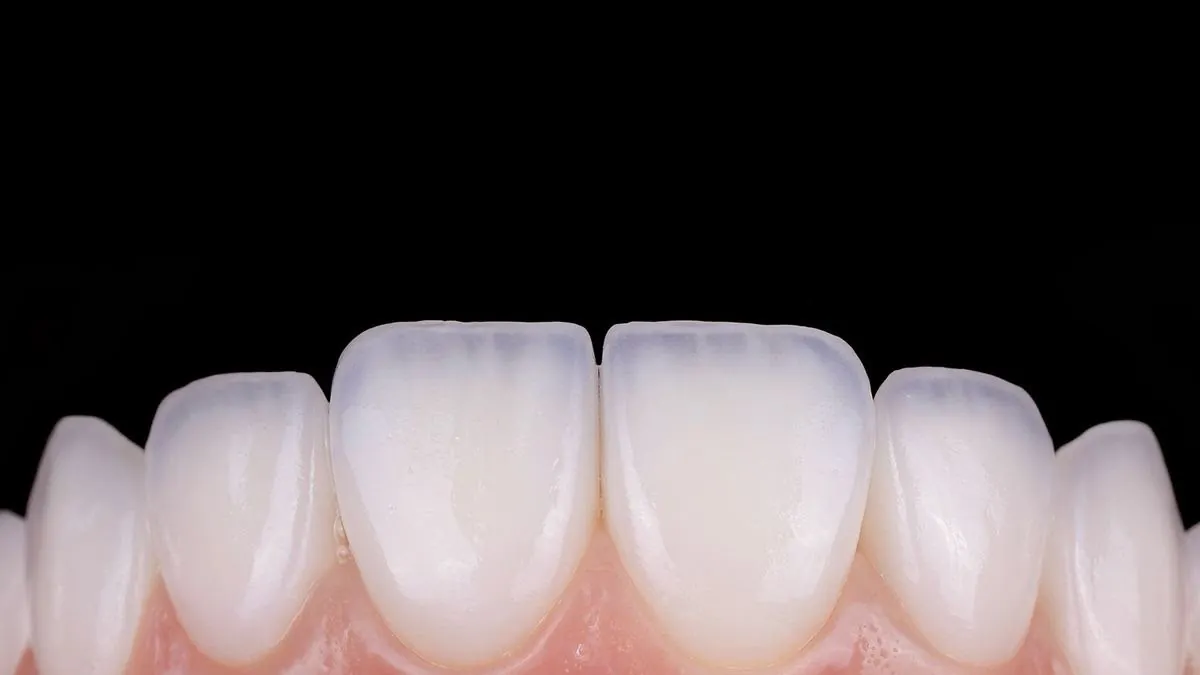
A porcelain veneer is a thin, custom-made shell of dental ceramic bonded to the front of a tooth to correct colour, shape, spacing, or minor misalignment. It is one of the most durable and natural-looking options for a smile makeover, because good ceramic reproduces the translucency of natural enamel in a way few other materials match. Our porcelain veneers page explains how Mineers designs them.
Porcelain vs composite: the lifespan gap matters. Porcelain veneers last 10 years or more with proper care, and clinical studies report that the large majority are still functioning after a decade. Composite lasts about 3 to 7 years and is more prone to staining, chipping, and gradual discolouration. Patient satisfaction with porcelain ranges from 80 to 100% across clinical studies. Composite bonding is a distinct option with its own shorter replacement cycle.
Are veneers permanent? In the sense that the process is irreversible, yes. Porcelain veneers need a small amount of enamel removed from each tooth so the ceramic sits flush with its neighbours. Once that enamel is gone, it cannot be restored. This is not a reason to avoid veneers; it is a reason to be sure you are happy with your planned result before any preparation begins. That is exactly what a try-in is for: a preview of your new smile before a single tooth is touched.
Material and lab quality are not interchangeable. A very low quote per tooth can reflect a lower-grade ceramic, rushed fabrication, or a laboratory with limited quality control. The ceramic and the lab behind your veneers matter as much as the dentist's skill. When comparing clinics, ask which porcelain system is used and where the veneers are made. A clinic that cannot answer that clearly is worth scrutinising before you commit.
What to Compare Besides the Price
Price is usually the first thing people compare, and the least informative on its own.
Insurance rarely helps. Canadian dental plans almost always treat porcelain veneers as cosmetic, which puts them outside covered benefits. The cost is yours, wherever you are treated.
Headline prices hide the steps. Some clinics bill digital smile design, mock-ups, temporary veneers, and final polishing as separate items. Each is reasonable on its own; together they change a quote considerably. Ask what is included, from the first scan to the final polish.
At Mineers, the planning is part of the treatment. Digital smile design, 3D scanning, and the Testineers try-in are built into every veneer plan from the start, not added afterwards. The cost of your treatment is discussed with you once your teeth have been examined and your plan is made.
For Lebanese Canadians, the trip is already planned. Flying elsewhere for dentistry means the flight, the hotel, and the time away all count against the treatment. When you are already visiting Beirut for family or holidays, those are part of your year regardless, and the dental appointments simply fit inside the visit.
Mineers Smile Center was founded in 2005, holds 5.0 on Google from 174 reviews, and plans every case with 3D scanning and the Testineers try-in from day one.
How Testineers Lets You Approve Your Smile Before Any Tooth Is Prepared
A good plan still cannot tell you, on its own, whether your new smile will look the way you want. That is where Mineers' process works differently.
Planning starts before you leave Canada. Photos of your teeth, or a recent X-ray, sent on WhatsApp or through the booking form are enough for the team to recommend a treatment, tell you how many visits it takes, and give you an estimate. By the time you board the flight, you know the plan.
Your first appointment goes further than most patients expect. A 3D scan of your teeth and a 3D scan of your face feed the smile design. You see your proposed smile on screen and can ask for changes before any irreversible step is taken. The Smile Design page shows each step of the method.
The Testineers try-in makes the design physical. A 3D-printed version of your planned veneers is placed over your natural teeth. You wear it in real light, in real conversation, and judge the shape, length, and proportions before any tooth preparation begins. If the length feels too bold or the shape needs softening, you say so with the real thing in front of you rather than trying to describe a preference.
This matters most when you are travelling for treatment. Once enamel is removed, the process cannot be undone, and correcting course becomes expensive. At Mineers, no tooth is prepared until you have approved both the digital design and the try-in.
That single step removes the most common source of regret: discovering after bonding that the result does not match what you had imagined.
Two to Three Appointments: How They Fit a Lebanon Trip
Once your design is approved, the clinical phase fits within a normal visit home without turning it into a medical itinerary. Veneers take two to three visits over one to two weeks, and the clinic sets the appointments around your stay.
Appointment one: design and try-in
Scans, facial photographs, the digital smile design, and the Testineers try-in. You leave with a clear picture of your planned result and the chance to refine shape or proportion. No enamel is touched at this stage.
Appointment two: preparation
Once the design is confirmed, the teeth are prepared, a scan is sent to the laboratory, and temporary veneers are fitted the same day, so you can eat and go out normally while your veneers are made.
Appointment three: bonding
The porcelain veneers are bonded, the bite is checked, the surfaces are polished, and you receive your aftercare instructions, including guidance for your dentist in Canada. You fly home with your finished smile.
The days between are yours
The time between appointments is laboratory time, not waiting-room time. Patients use it for family, travel around Lebanon, or rest. The plan is designed to sit inside a holiday, not replace one.
How to Prepare for Your Veneer Trip from Canada: A Practical Checklist
Knowing how the appointments fit your trip is one thing; arriving ready to make the most of them is another. These steps turn a good plan into a smooth one.
Start the conversation before you book flights. Write to Mineers through the booking form or on WhatsApp, or call +961 3 757 127. Sending your photos, dental history, and goals early confirms the plan and the number of visits before you commit to dates.
Take your smile photos first. Three clear shots help: a full-face smile, a relaxed portrait with your lips at rest, and a close-up of your teeth. They let the team start on your design, so your first appointment moves straight into meaningful work.
Allow enough days. Ask the clinic how many days your case needs, with room between appointments for family visits, before you book. Flights from major Canadian cities to Beirut–Rafic Hariri International Airport (BEY) usually involve one stop.
Note the clinic's location. Mineers is at Sodeco Square, Block B, 4th floor, Achrafieh. Taxis and ride-hailing apps reach it easily from hotels in Achrafieh, Gemmayzeh, and the city centre.
Arrive with healthy gums. Clean teeth make the assessment quicker. If there is active gum inflammation or significant build-up, a deep cleaning may be needed before veneer preparation can begin, which adds time. A hygiene visit with your dentist in Canada before you leave helps you arrive ready.
Read your insurance policy in advance. Most Canadian plans exclude porcelain veneers as cosmetic. Some cover emergency or restorative work done outside Canada. Read the out-of-country clause before you go, to avoid surprises when you return.
Porcelain or Composite Veneers: Which Is Worth the Trip?
With your checklist in order, one question remains: porcelain or composite?
The lifespan gap, composite at about 3 to 7 years against 10 or more for porcelain, changes the logic of travelling for treatment. A composite case that needs redoing within five years can turn one trip into two.
Porcelain resists staining reliably and reproduces the way light passes through natural enamel. That matters most on the upper front teeth, where the difference between porcelain and composite is visible in daylight.
The choice is not always either-or. Mineers offers composite bonding in a single visit for a single chipped tooth or a small gap, and it is the right call for isolated repairs. For a complete smile transformation, porcelain is the clinically appropriate choice for both longevity and appearance. If you are unsure which applies to you, Dental Crown vs Veneer: Key Differences and How to Choose covers the decision in more detail.
On permanence: porcelain veneers require irreversible enamel reduction and should be treated as a lifelong commitment. Composite involves little or no enamel removal and is often reversible. They are not the same product at different prices; they solve different problems with different consequences for the tooth underneath.
Follow-Up Care When You Return to Canada
Once you've chosen porcelain for the long term, the next question is what care looks like after you land back in Toronto, Montreal, or Vancouver.
Porcelain veneers do not need specialist follow-up. Your regular dentist handles it: hygiene visits every six months, routine X-rays, and polishing are enough to look after the veneers and the gums around them. For background on how veneers and gum health interact, see The Connection Between Gum Health and Cosmetic Dentistry.
You leave with your aftercare instructions, and veneers include a follow-up window. Ask for a written summary of your treatment to give your Canadian dentist, covering the materials used and how the teeth were prepared, so they can care for your veneers with confidence.
The most common reasons to see a dentist after veneers, a small chip at the edge, a bite that needs a slight adjustment, or temporary gum sensitivity, are all routine general dentistry. Any licensed dentist in Canada can handle them without a return trip.
One practical step matters: tell your Canadian dentist that your veneers were bonded to prepared enamel. It informs their choice of cleaning instruments, how they read X-rays, and any future night guard.
For something more significant, such as a crack or a veneer coming loose, the clinic stays a message away on WhatsApp or by email, and by phone at +961 3 757 127. The team can advise whether a dentist in Canada can resolve it or whether it should wait for your next visit.
Red Flags When Comparing Veneer Clinics Abroad
Choosing a clinic abroad deserves the same care you would take at home, perhaps more. Five warning signs separate careful cosmetic practices from high-volume operations that cut corners where patients cannot see.
A price that looks too good to be true. Ask any clinic whether its ceramics meet ISO 6872, the international standard for dental ceramics. Very low prices rarely allow for the materials and laboratory care that standard implies, and a saving disappears quickly if the veneers need replacing within a few years.
No mock-up or approval stage. Skipping the try-in removes the only checkpoint protecting you from an irreversible result you did not approve.
Vague answers about materials and the laboratory. A careful clinic can name its ceramic and describe where its veneers are made without hesitation.
Galleries without context. Before-and-after photos with no information about the patient or the treatment are often the best one or two per cent of cases. If a gallery looks uniformly perfect, treat it as marketing rather than evidence.
No clear answer on what happens if you are unhappy. Ask every clinic, in writing, what happens if you are dissatisfied with the bonded result. For a patient who cannot simply drive back for a correction, the absence of an answer is a real risk.
Is a Beirut Smile Makeover the Right Move for You?
Once you have weighed the red flags and found a clinic that is open about materials, planning, and follow-up, the decision becomes simpler.
The clinical case: the Testineers try-in lets you approve the shape, length, and proportions in real light, in real situations, before any enamel is touched, which removes the main source of regret and of return trips for corrections.
The practical case: two to three appointments fit inside a normal visit to Lebanon, and follow-up needs only routine general dentistry in Canada.
The personal case: for patients already visiting family, treatment becomes part of a trip home rather than a separate journey.
The right time to start is before you book the flights. Sending your photos early means your design and try-in can happen at the start of your visit, and your new smile can be bonded before you fly home.
Share your photos, tell us your goals, and receive a plan and an estimate before you commit to dates. Book a private consultation or call +961 3 757 127 to begin.
Conclusion
A porcelain veneer smile makeover is a significant decision, and where you have it done matters as much as the result. At Mineers Smile Center in Beirut, digital planning and the Testineers try-in mean Canadian patients approve their smile before any irreversible step, and go home with aftercare instructions and a clinic that stays a message away.
The process is transparent. The appointments fit a visit to Lebanon. Your next step is simple: send your photos and receive a personal plan before you book a single flight.