Aligners · 14 min read
Clear Aligners vs Braces: The Honest Guide for Australian Adults
Clear aligners or braces? An evidence-based comparison for Australian adults: which suits your case, what to ask about costs, and treatment during a visit to Lebanon.
Mineers Smile Center
Choosing between clear aligners and braces should be straightforward. In practice, most adults researching their options run into a wall of brand marketing, anecdotal forum threads, and clinic websites that quietly leave out the limitations of whatever they happen to sell. That is not much use when you are making a decision that affects your smile, your budget, and the next one to two years of your life.
This guide takes a different approach. Drawing on current clinical evidence, it gives Australian adults an honest, side-by-side comparison of both treatments, covering comfort, appearance, the discipline each one asks of you, clinical capability, and the questions to ask about cost. You will also learn why case selection and digital planning matter far more than the appliance itself, and why the gap between the two is smaller than most people assume for mild-to-moderate crowding and spacing.
If you are considering treatment abroad, the final sections cover what Australians need to know before committing, including how Mineers Smile Center plans Fixaligner® treatment in Beirut.
Why Most Comparisons Get This Wrong
Most orthodontic content online is selling you something. Clear aligner brands present their product as the modern, comfortable, socially acceptable choice. Traditional orthodontists counter with clinical authority and case complexity. What both sides tend to downplay is the variable that actually decides whether your teeth end up where they should: whether your case was correctly selected for the appliance being used.
The "invisible vs metal" framing dominates search results. It is a compelling frame, but it hides more than it reveals. A cross-sectional survey of Australian dental practitioners found that 98.4% were comfortable using aligners for mild crowding, but only 73.4% felt confident treating more complex cases. That gap is not a marketing statistic. It is a clinical one, and it matters to your outcome.
The honest conclusion the evidence supports is not that one appliance is categorically better. It is that the right choice depends on your particular bite and on how carefully the clinic assessing you plans treatment. If you want to know how long treatment usually takes, our clear aligner timeline guide is worth reading alongside this comparison.
Who This Guide Is For (and Who Needs a Specialist First)
This guide is written for adults with mild-to-moderate crowding or spacing who are weighing their options before choosing a provider. If you already know what braces and aligners are but are unsure which suits your case, or how to judge a clinic's claims, you are the intended reader.
If your situation involves significant skeletal discrepancies, severe crowding, impacted teeth, or earlier orthodontic treatment that did not hold, this comparison is not your starting point. You need a specialist assessment first. The variables in complex cases go beyond what any guide can resolve.
Two practical threads run through the piece that most comparison articles skip. First, cost: what a quote should include, and where insurance falls short. Second, the overseas question. Many Australians with connections to Lebanon already ask whether it makes sense to have treatment during a visit. That question deserves a direct, honest answer, and this guide gives one.
What the Clinical Evidence Shows
Here is what the peer-reviewed literature says, without the marketing.
A 2024 comparative study of 100 adults, half treated with clear aligners and half with braces, found both effective at aligning teeth. After twelve months the improvement in alignment was similar in the two groups, while the aligner group finished sooner on average (14.5 months against 16.2), reported less discomfort, and was more often highly satisfied.
A March 2025 expert consensus published in the International Journal of Oral Science reinforces the picture at a broader level. Both methods are effective for adults; what determines success is the severity of the bite problem and how consistently the patient follows treatment, not which appliance is fitted. A systematic review indexed on PubMed Central reaches the same conclusion: neither option is categorically superior, and clinical judgment in case selection is the deciding variable.
The same consensus sets a practical standard: visualising the outcome and assessing the case in 3D before any tooth is moved.
Taken together, these findings reframe the decision. The question is not which product is objectively better. It is whether your case suits the method being recommended, and whether your clinic plans with enough rigour to predict the outcome before committing you to it.
Visibility and Comfort: Where Clear Aligners Win
Outcome data tells you what each option achieves; it does not tell you what treatment feels like across a year or more of daily life. On visibility and comfort, the two options are genuinely unequal, and aligners hold the clearer advantage.
Appearance in practice
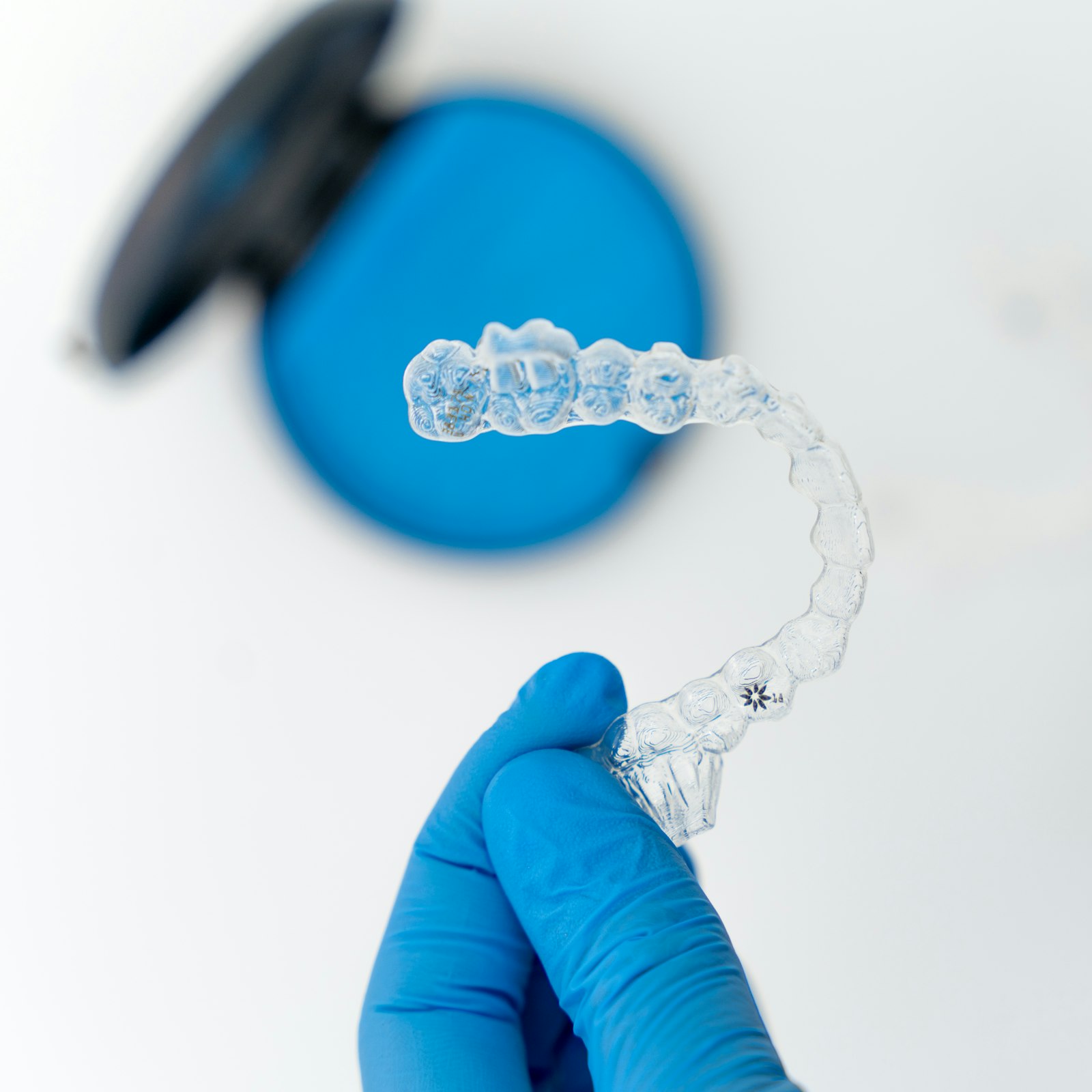
Clear aligner trays are made from transparent plastic and sit flush against the teeth. In ordinary work and social settings, they are barely noticeable. Braces, metal or ceramic, involve brackets bonded to the front of each tooth throughout treatment. Ceramic brackets reduce the contrast against the enamel, but they are still there, and visible at conversational distance. For adults in client-facing roles, or anyone for whom appearance during treatment matters, the difference is not trivial.
Comfort across treatment
Clinical comparisons consistently show lower pain scores and less irritation of the cheeks and gums for aligner patients than for those in braces. Braces rub against the inner cheeks and gums, and the discomfort usually peaks in the days after each adjustment appointment.
Aligner trays are smooth, moulded to your teeth, and have no sharp edges or wire ends. Patients generally describe a short adjustment period with each new tray rather than a recurring cycle tied to clinic visits.
For anyone considering what clear aligner treatment involves day to day, the comfort profile is a genuine clinical benefit, provided the case suits aligners in the first place.
Wear Time: The Trade-Off Aligners Ask You to Honour
The appearance and comfort advantages come with a catch: aligners only work when they are in your mouth.
The requirement is 20 to 22 hours of wear a day. That is not a conservative suggestion; below it, planned tooth movements start to drift off sequence. Every unnecessary hour out adds up across weeks and trays.
This is the paradox. The removability that makes clear aligners so appealing, the freedom to eat normally, take a photo, or go to a formal dinner without hardware on show, is exactly what introduces a failure mode braces do not have. Braces are bonded to your teeth. They cannot be taken out.
Not all adults carry the same risk. People with predictable routines, or whose main motivation is appearance, tend to wear their trays consistently. Those with irregular schedules, frequent travel, shift work, or long meals out face a real challenge. This is not a character flaw; it is a lifestyle reality that belongs in treatment planning.
The consequences of inconsistent wear are clinical and financial. Longer treatment is the minimum. More significantly, teeth can reach the end of a tray sequence without completing their planned movement, and extra refinement trays are then needed.
Braces avoid this entirely, but they impose their own discipline. Hard, sticky, and chewy foods must be avoided to protect brackets and wires, and cleaning around them takes time and the right tools. For guidance on looking after your gums during orthodontic treatment, see The Connection Between Gum Health and Cosmetic Dentistry.
Honest self-assessment of your routine is not a minor footnote in this decision. A dentist who does not ask about your daily life before recommending an appliance is skipping a real clinical input.
Clinical Capability: What Each Option Can and Cannot Handle
Wear time only matters if your case suits the appliance in the first place.
Braces have a broader mechanical range. Fixed appliances can control significant rotations, move teeth vertically, manage the tilt of the back teeth, and work with elastics for bite correction. These movements need continuous, three-dimensional force that a removable tray cannot reliably deliver.
Clear aligners perform well within their lane. Mild-to-moderate crowding and spacing, minor bite corrections, and movements that stay largely within the line of the arch are where the aligner evidence is strongest. That is exactly why the studies above find the two methods comparable: the cases were appropriately selected.
The 2025 expert consensus is unambiguous on this point. Aligner success depends on a clinician screening out unsuitable cases; the evidence does not support marketing aligners as a universal solution. A separate consensus of internationally published orthodontists, in Progress in Orthodontics in 2025, reached the same position: indications matter, and a clinician's assessment is non-negotiable.
Straightening teeth without braces is achievable for many adults, but that cannot be decided from a comparison article, including this one. It takes a clinical assessment, 3D imaging, and a dentist who will tell you honestly when braces are the right tool.
The real risk of a mismatched case is not just a slower result. Incomplete movements from an unsuitable aligner case can be harder to correct than the original problem, and retreatment adds both cost and time.
Case Selection and Digital Planning: The Variable That Matters Most
Knowing which appliance suits your case is only half the equation. The other half is whether your clinic has the tools to decide that accurately before treatment begins.
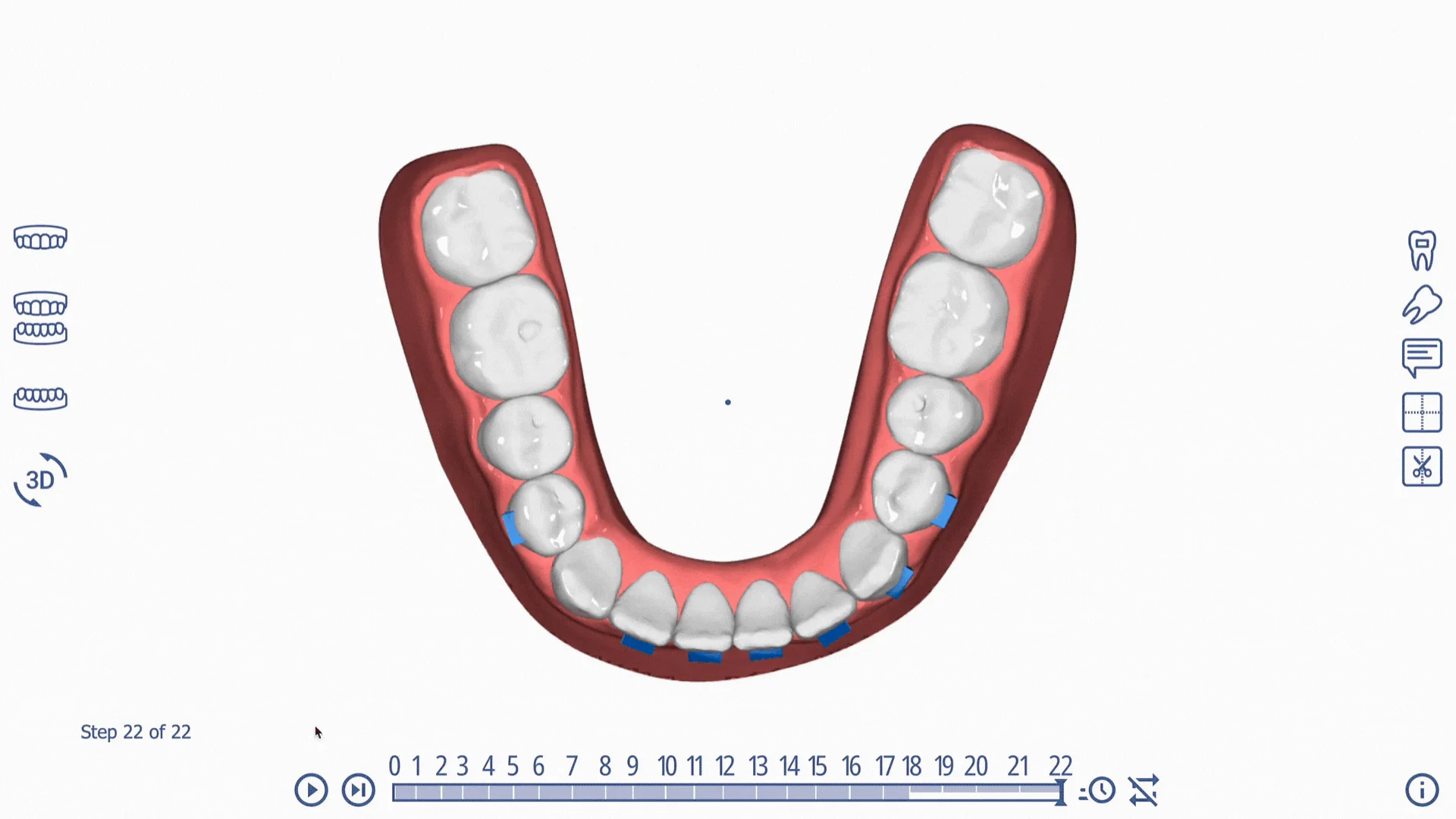
The 2025 consensus is clear that digital planning is the current evidence-based standard, not an optional upgrade. That means 3D intraoral scanning, digital smile design, and a preview of the outcome are baseline requirements for responsible case management. These tools let a clinician assess your bite objectively and match the appliance to what your teeth need, rather than defaulting to whatever the clinic prescribes most.
The practical implication is the "predict before you treat" principle. Before any appliance is fitted, you should be able to see a simulation of your planned result. For more on what that preview involves, read What Is Digital Smile Design and How Does It Work?
This standard also exposes a real risk in the market. Mail-order aligner packages that skip clinical assessment are the category most exposed to poor case selection. Removing clinical supervision removes the safeguard that makes aligner treatment predictable.
When you evaluate any clinic, three questions cut through the marketing quickly: Does the clinic take a 3D scan of your teeth? Does it use digital smile design? Can you preview your result before committing?
These questions apply equally in Sydney, Melbourne, or Beirut. The technology and the protocol are the benchmark. Geography is not.
What to Check in Any Orthodontic Quote
Once you understand the planning standard, cost is the next honest conversation.
In Australia, fees for braces and for clear aligners vary widely with the complexity of the case, the type of provider, and the city. Private health cover with orthodontic extras usually pays only part of the cost, often after a waiting period and up to a lifetime limit, so check your own policy before you plan around it.
One critical note on quotes. A figure that leaves out the consultation, diagnostic scans, retainers, and possible refinement trays is incomplete. Refinement trays in particular are often needed in aligner treatment and are not always included in the first quote. Ask for the total cost in writing, itemised, before you commit. The question to ask is: "Does this include everything from the first scan to the last retainer?" If the answer is not a clear yes, keep asking.
Considering Treatment Overseas: What Australians Need to Know
The question worth asking is not whether overseas treatment is acceptable in principle, but what makes it work safely.
Orthodontic treatment abroad is not inherently risky. What causes problems is logistics: follow-up that is not planned, no clear contact for emergencies, and retention support that ends at the airport. Each needs to be confirmed in writing before you commit.
Credentials matter, and they can be checked. Ask whether the treating dentist holds a recognised dental qualification and how the clinic plans treatment. The minimum today is digital planning: a 3D scan, digital smile design, and a preview before any appliance is made. A clinic that cannot show this is not working to the current standard, wherever it is.
The logistics change for Australians already travelling to Lebanon. For Lebanese Australians visiting family, the trip is happening regardless. That is a very different situation from dental tourism from scratch; the travel is already part of your year. Our page on visiting Beirut for treatment explains how the clinic plans around a stay.
Retention is non-negotiable and often overlooked. Retainers are needed after every aligner treatment. Confirm three things: does the clinic provide them at the end of treatment, can it supply replacements later, and will a dentist in Australia be able to check your retention? Get this in writing.
The right question is not "is it cheaper?" It is: "does this clinic plan treatment to the same digital standard I would expect from a reputable Australian provider?" Where the answer is yes, and case selection and follow-up are handled properly, clear aligner treatment abroad can be clinically equivalent to treatment at home.
How Fixaligner® Treatment Works at Mineers Smile Center
Mineers Smile Center, founded in 2005 and based at Sodeco Square in Achrafieh, Beirut, plans every case digitally: each one begins with facial photos, a facial analysis, and a 3D scan of your teeth before any treatment decision is made.
The step that sets Mineers apart most concretely is Testineers, our smile try-in. Before your aligners are made, a 3D-printed mock-up of the planned result is produced. You can review it on screen and try it on. This is the "predict before you treat" principle in a form you can hold.
Fixaligner®, the clinic's clear aligner system, is 3D printed at Mineers and suited to the mild-to-moderate adult cases where the evidence is strongest, the same kind of cases in which the studies above found aligners as effective as braces. The clinic is led by Dr. Elias Abou Tayeh, DDS, and holds 5.0 on Google from 174 reviews, with Lebanese patients from abroad who plan treatment around their visits home.
For Australians planning a trip to Lebanon, the practical path is straightforward. Photos of your teeth sent before you travel let the team recommend a treatment and give you an estimate; a consultation during your visit then confirms whether your case suits aligners, with a digital design you can review before you leave.
That consultation answers the three questions that matter most for anyone considering orthodontic treatment abroad: is your case clinically suitable for aligners, what will your result look like, and what will it cost from start to finish, retainers included.
Who Should Choose Clear Aligners, Who Should Choose Braces
Choose clear aligners if your case involves mild-to-moderate crowding or spacing, you are a motivated adult with a predictable routine, and your appearance during treatment matters to you. The prerequisite is a clinic that previews your result with a 3D scan and digital smile design before any appliance is made.
Choose braces if your case involves complex rotations, significant bite correction, or vertical tooth movements that need the full range of fixed appliances. Choose braces too if honest self-assessment tells you 22 hours of daily wear is unrealistic for your life; wear time is a clinical variable, not a personal failing, and braces remove it entirely.
In either case, the single most important filter is the quality of case selection at your clinic. A digitally planned aligner case from a rigorous clinic will do better than a casually prescribed one, whatever the brand on the tray.
Aligners' tendency to finish sooner does not override suitability. A correctly chosen braces case will produce a better result than an incorrectly chosen aligner case, even with the longer treatment time.
Retainers are needed after both treatments, without exception. They are not an extra; they are what holds your result. Include them in your total cost from the start, whichever appliance you choose.
If you are unsure which category your case falls into, the right first step is a consultation that includes a 3D scan. Photos alone cannot capture the measurements that decide suitability. A scan can, and it removes the guesswork before any financial or clinical commitment.
The Bottom Line: Same Destination, Different Roads
For mild-to-moderate adult crowding and spacing, both paths reach the same destination. The choice between them is a legitimate lifestyle decision shaped by appearance, confidence in wearing the trays, and cost, not a gamble on clinical results.
What the evidence is unambiguous about is this: digital planning and proper case selection predict success more reliably than the appliance itself. A clinic that scans your teeth in 3D and shows you a simulation of the outcome before you commit is the non-negotiable, in Sydney, Melbourne, or Beirut.
For Australians with family ties to Lebanon, a consultation at Mineers during a planned trip is not a compromise; it is a clinically credible option. Mineers has cared for patients in Beirut since 2005, plans every Fixaligner® case digitally, and lets you try on your result as a 3D-printed mock-up before a single tooth is moved.
If you are ready to see your result before you commit, book a private consultation or call +961 3 757 127.
Conclusion
Choosing between clear aligners and braces comes down to four things. First, for mild-to-moderate adult cases, both deliver comparable clinical results. Second, appearance, comfort, and confidence in wearing the trays are legitimate deciding factors, not superficial ones. Third, digital planning and rigorous case selection matter more than the appliance. Fourth, cost matters, so ask for a complete, written quote wherever you are treated.
You now have the framework to walk into any orthodontic consultation informed and prepared: the questions to ask, the red flags to avoid, and what a thorough planning process should look like.