Gum health · 4 min read
Plaque and Tartar: What Is the Difference?
Plaque is the soft film you can brush away. Tartar is what it becomes if it stays. How one turns into the other, what each does to gums and teeth, and why a dentist has to remove tartar.
Mineers Smile Center

The two words get used as if they mean the same thing. They do not, and the difference explains most of what a dental cleaning is for: one is something you can remove at home, and the other is not.
Plaque: the soft film
The American Dental Association (ADA) describes plaque as a sticky film that covers your teeth and can contribute to tooth decay and gum disease. It contains bacteria, and after a meal or snack that contains sugar those bacteria can release acids that attack the enamel. Repeated attacks can make the enamel break down, which is how cavities begin (ADA MouthHealthy).
The NHS describes it in the same way, as a film of bacteria that coats your teeth if you do not brush them properly. Brushing stops plaque building up, so the aim is to clean every surface of every tooth (NHS).
Tartar: plaque that has hardened
If plaque is not removed by thorough daily brushing and cleaning between the teeth, the ADA says it can eventually harden into calculus, also called tartar. That makes it more difficult to keep your teeth clean. Once tartar has formed, only your dentist can remove it, though flossing every day can stop plaque building up in the first place (ADA MouthHealthy).
| Plaque | Tartar (calculus) | |
|---|---|---|
| What it is | A soft, sticky film of bacteria. | Plaque that has hardened into a rough deposit. |
| Where | On all surfaces of the teeth, and between them. | Often builds along the gum line. |
| Can you remove it at home? | Yes, by brushing and cleaning between the teeth. | No. Only a dentist can. |
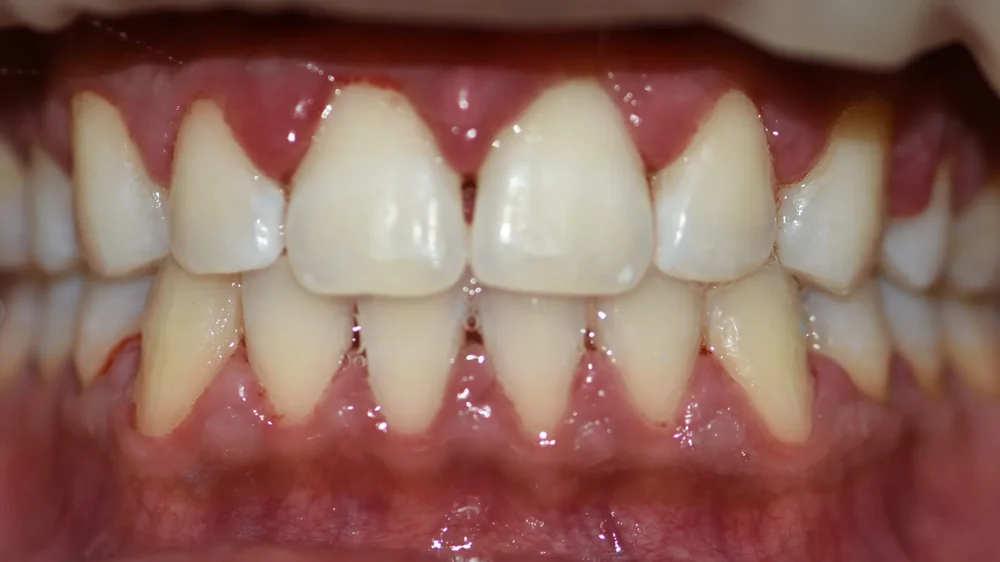
| What it does | Releases acids that attack enamel; contributes to decay and gum disease. | Makes cleaning harder; gums beside it can become swollen and bleed. |
What tartar does to gums
When tartar collects above the gum line, the ADA says the gum tissue can become swollen and may bleed easily. This is gingivitis, the early stage of gum disease. At this stage it is still reversible, and can usually be cleared by a professional cleaning followed by daily brushing and flossing. If it is left, it can progress to periodontitis, which can lead to loss of the tissue and bone that support the teeth (ADA MouthHealthy).
That is the link with bleeding gums: gums that bleed easily are one of the ADA's listed warning signs.
Which cleaning removes it?
Tartar above the gum line is removed in a regular cleaning. Tartar that has reached below the gum line is a different matter. On our deep cleaning page: a regular cleaning removes plaque and tartar above the gum line for patients with healthy gums, and a deep cleaning, also called scaling and root planing, removes plaque and tartar from below the gum line and smooths the tooth root. It is needed when gum disease is present. The area is numbed, and the treatment is usually done over one or two visits, followed by a check about 4 to 6 weeks later to see how the gums are healing. Deep Cleaning or a Regular Clean explains the difference in full.
What you can do every day
- Brush twice a day for about two minutes with fluoride toothpaste, cleaning every surface; the NHS says to brush last thing at night and on one other occasion.
- Clean between your teeth every day. The ADA names floss, picks, tiny brushes and water flossers as safe tools; see Cleaning Between Your Teeth.
- Think about a rinse. The ADA says a therapeutic mouthwash can reduce plaque and gingivitis and can slow the speed at which tartar forms, but it does not replace brushing and flossing (ADA MouthHealthy).
- Keep your check-ups. How Often Do You Need a Dental Check-up? explains how the gap is set.
Notice rough deposits near the gum line, or gums that bleed? Book a private consultation, or send a note on WhatsApp, +961 3 757 127.
This article is general information, not a diagnosis. Treatment plans and results vary from person to person.