Your visit · 3 min read
How Often Do You Need a Dental Check-up? And What Happens at One
Every six months is a habit, not a rule. What the NHS says about how often, what a check-up covers, why gum disease can be silent, and who may need to come more often.
Mineers Smile Center
"Every six months" is the rule most of us grew up with. It is a handy habit, but it is not what the health services say. The right gap between check-ups is different for each mouth, and a good dentist tells you what yours is.
Does everyone need a check-up every six months?
The NHS says you may assume you should have a check-up every 6 months, but some people do not need to go that often and others need more frequent checks. Your dentist should suggest when to come back, based on how good your oral health is. The time between check-ups can vary from 3 months to 2 years, depending on how healthy your teeth and gums are and your risk of future problems. For under-18s it is up to 1 year (NHS).
The reasoning is straightforward. The lower your risk of dental problems, the longer you can wait: people with good oral health will probably need to attend only once every 12 to 24 months, and those with more problems will need check-ups more often.
What a check-up covers
According to the NHS, at each check-up your dentist should:
- examine your teeth, gums and mouth;
- ask about your general health, and about any problems with your teeth, mouth or gums since your last visit;
- ask about, and give advice on, your diet, smoking and alcohol use, and teeth-cleaning habits;
- discuss a date for your next visit.
The NHS is clear that this is about routine check-ups only. Fillings, tooth removal and emergency treatment are separate appointments. If you have problems between check-ups, contact your dentist rather than waiting for the next date.
Why some problems do not announce themselves
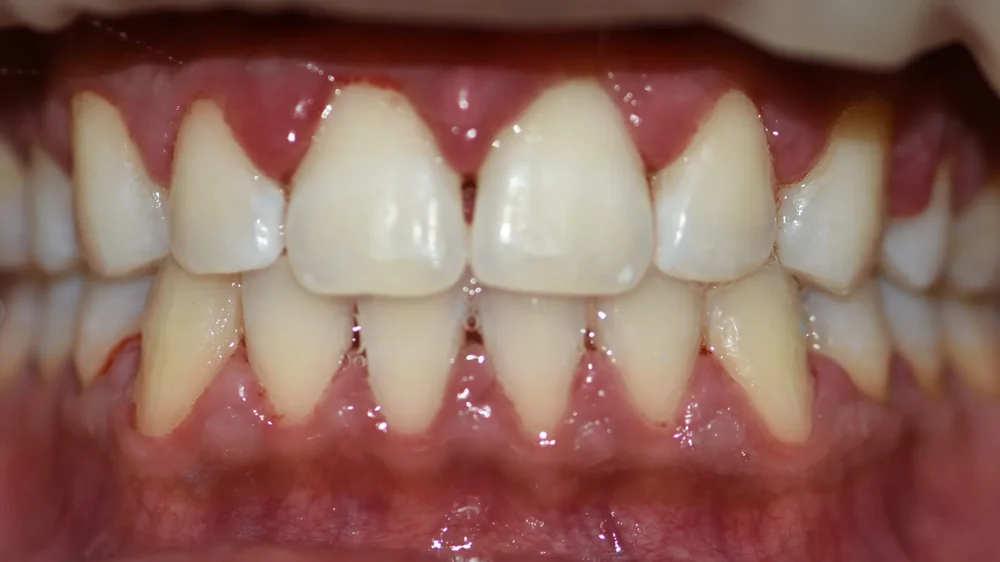
The ADA says gum disease is usually painless, so you may not know you have it, and that it is possible to have gum disease and no warning signs at all. That is one reason it calls regular dental checkups and periodontal examinations very important (ADA MouthHealthy). At a routine check-up the dentist can measure the gum pockets around each tooth; on our deep cleaning page, pockets found at a routine check-up are one of the signs that a deeper clean is needed. Deep Cleaning or a Regular Clean explains the difference.
Who may need to come more often
The NHS puts it as the more problems you have, the more often you will be seen. The ADA lists factors that raise the risk of gum disease:
- poor oral hygiene;
- smoking or chewing tobacco;
- genetics;
- crooked teeth that are hard to keep clean;
- pregnancy;
- diabetes;
- some medications.
A public-health guide from the Victorian Government adds that people who smoke or vape are at higher risk of gum problems and should visit a dentist regularly, and should tell the dentist if they vape (Better Health Channel); see Smoking, Vaping and Your Smile.
If your gums bleed when you brush, do not wait for the next date: Bleeding Gums When You Brush explains why.
If you have dental work
Veneers, crowns, implants and aligners each come with their own plan for follow-up visits, so ask what yours is. Between visits, the ADA's advice for keeping a veneer healthy is the same as for any tooth: brush with fluoride toothpaste twice a day and clean between your teeth daily.
Questions to ask at the end of a visit
- When should I come back, and why that interval?
- Is there anything you want to watch before then?
- Which signs should make me call sooner?
- Do I need any X-rays, and how often? (Dental X-rays explains why.)
Not sure when your next visit is due? On our booking form you can choose "I'm not sure yet" and tell us what you would like to change. Book a private consultation, or write to us on WhatsApp, +961 3 757 127.
This article is general information, not a diagnosis. Treatment plans and results vary from person to person.