Veneers · 5 min read
Replacing Old Veneers: When a Redo Makes Sense and What It Involves
Chipped, stained at the edges, too white or too bulky? Why veneers are replaced, whether all of them need changing, and how a redo is planned.
Mineers Smile Center
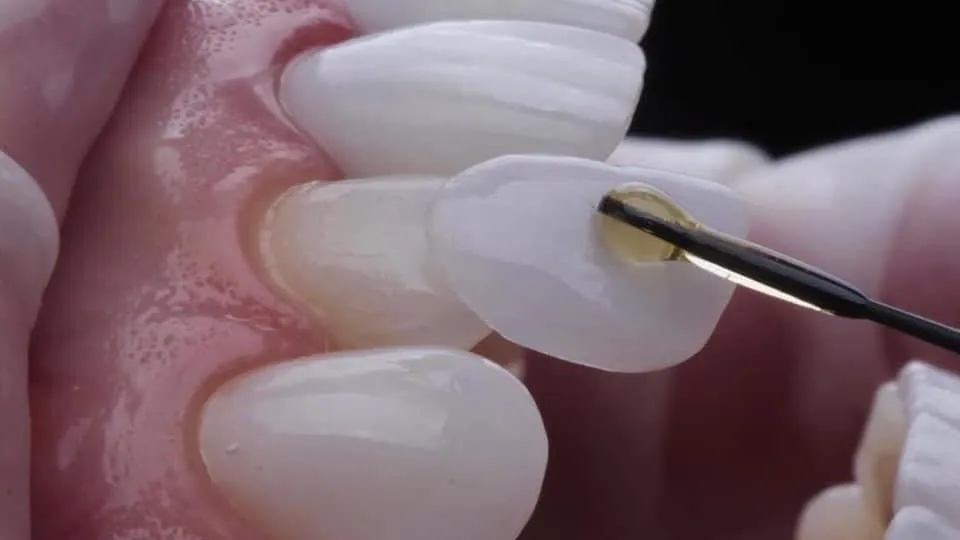
Veneers are made to last for years, but not forever. Some people want to replace a veneer because it has chipped. Others have veneers that are perfectly intact but never looked right: too white, too thick, too long, or all the same shape.
Either way, the questions are the same. Can they be replaced? What happens to the teeth underneath? And how do you make sure the new ones look better than the old? This article answers them.
How long veneers last
Porcelain veneers can last 10 to 20 years with good care (How Long Do Porcelain Veneers Last?). Composite veneers are easier to repair, but the American Dental Association notes that they are not as resistant to staining and wear. The ADA also says that any veneer may chip, crack, wear down or loosen over time, and need to be re-bonded, repaired or replaced (ADA MouthHealthy).
Why veneers are replaced
Wear and damage
- A chip or crack in the porcelain
- A veneer that has come loose
- Composite veneers that have stained, lost their shine or worn at the edges
Changes around the veneer
- A dark line or stain where the veneer meets the tooth
- Gums that have receded, so the edge of the veneer or the root now shows
- Decay at the edge or underneath: the ADA reminds patients that cavities can still form under or around a veneer (ADA MouthHealthy)
They never looked natural
- A shade that is too white or too opaque for the face
- Veneers that are thick, making the teeth or lips look full
- Teeth that are too long, too square, or all identical
- A smile designed on the teeth alone, without looking at the face
The last group is about design rather than damage, and a new design can address it. Will My Veneers Look Natural? explains the six details that make the difference.
Repair or replace?
Not every problem needs a new veneer. A small chip in a composite veneer can often be repaired in the chair. A porcelain veneer that has come loose but is undamaged can sometimes be bonded back. A cracked veneer, a stained edge with decay underneath, or a veneer that simply looks wrong usually means a replacement. An examination, with X-rays where needed, shows which applies to you.
Do you need to replace all of them?
Not always. If one veneer is damaged and the rest still look good, one veneer can be replaced. The new one is then made to match its neighbours, in shade, texture and shape, rather than to a new design.
If the problem is the design itself, for example veneers that are too white or too bulky, replacing a single one only copies the problem. Then the whole smile is usually redesigned. As with a first set, how many teeth are included depends on how wide you smile and which teeth show when you do.
Can the teeth go back to how they were?
Usually not completely. The ADA notes that veneer treatment is not reversible, because enamel is removed to place a veneer (ADA MouthHealthy). A tooth that was prepared for a porcelain veneer generally needs to be covered again. Composite veneers may have needed less enamel removed, which can leave more options. Ask about this at the examination, before anything is taken off.
How a redo is planned at Mineers
A redo is planned like a first set of veneers, with one extra concern: the teeth underneath have been treated before.
- Examination. Photographs, a 3D face scan, a 3D scan of your teeth, and an examination under the microscope, with X-rays to check the teeth and the bone. Your gums are checked too: the ADA says decay and gum disease must be treated before veneers are placed (ADA MouthHealthy).
- Design. Your new smile is designed on screen around your face, shown to you as a simulation on your own smile, and refined with you. You approve the design before the old veneers are removed.
- Preparation. The old veneers are removed and the teeth are checked and prepared. Temporary veneers are worn while the new ones are made.
- Fitting. Each new veneer is tried in, checked for fit and colour, and bonded, one at a time.
If your gum line has changed since your first veneers, it is taken into account in the new design. When the gum line is uneven, it can sometimes be evened out first (crown lengthening).
Making the new set last
The ADA's advice applies to a second set as much as a first: avoid biting your nails or chewing hard objects, wear a mouthguard for sport, limit coffee, tea and red wine, brush with fluoride toothpaste twice a day, and clean between your teeth daily (ADA MouthHealthy). The ADA also notes that veneers may not be a good choice if you clench or grind your teeth, so if you do, tell your dentist and ask whether a night guard is recommended for you.
Questions to ask before a redo
- Why exactly do my veneers need replacing: damage, decay or appearance?
- Can any of them be repaired instead?
- What can you tell about the teeth underneath?
- Will you change the shade, the shape and the thickness, and can I see the new design first?
- Do my gums need treatment before new veneers?
- What can I do to make the new ones last?
Our porcelain veneers page shows how a set of veneers is designed and made, step by step.
Not happy with the veneers you have? Send us a few photos on WhatsApp, +961 3 757 127, or book a private consultation.
This article is general information, not a diagnosis. Treatment plans and results vary from person to person.