Implants · 4 min read
Single Implant, Several Teeth or a Full Arch? How Your Implant Plan Is Made
How many implants do you need, can both jaws be treated, and what shapes the quote? A plain guide to single-tooth, several-tooth and full-arch implant plans.
Mineers Smile Center
The questions we hear most about implants are practical ones. How many will I need? I am missing several back teeth: is that one implant each? Can both my upper and lower teeth be fixed? And what decides the cost?
The honest answer to all four is the same: it depends on your bone, your gums, your bite and your general health, and it is decided by an examination and a 3D scan, not by the name of the treatment. Here is how the thinking works.
Three kinds of implant plan
| Your situation | Common approach | What the plan depends on |
|---|---|---|
| One missing tooth | One implant and one crown | Bone at the site, the neighbouring teeth, your bite |
| Several missing teeth | One implant per tooth, or fewer implants carrying a bridge | How much bone there is, the space, how hard you bite and grind |
| Most or all teeth in a jaw | A fixed bridge held by a small number of implants | Bone in the whole jaw, gum health, the shape of the arch |
One missing tooth
This is the simplest case: an implant takes the place of the root, and a crown goes on top once the bone has healed around it. If you are weighing it against a bridge, Dental Implants vs Bridges sets out the trade-offs.
Several missing teeth
Missing four molars does not automatically mean four implants. Depending on the bone and the space, the plan might be an implant for every tooth, or fewer implants carrying a small bridge. Neither is right for everybody. The planning question is how to spread the chewing load safely, and that is judged on the scan.
A whole arch
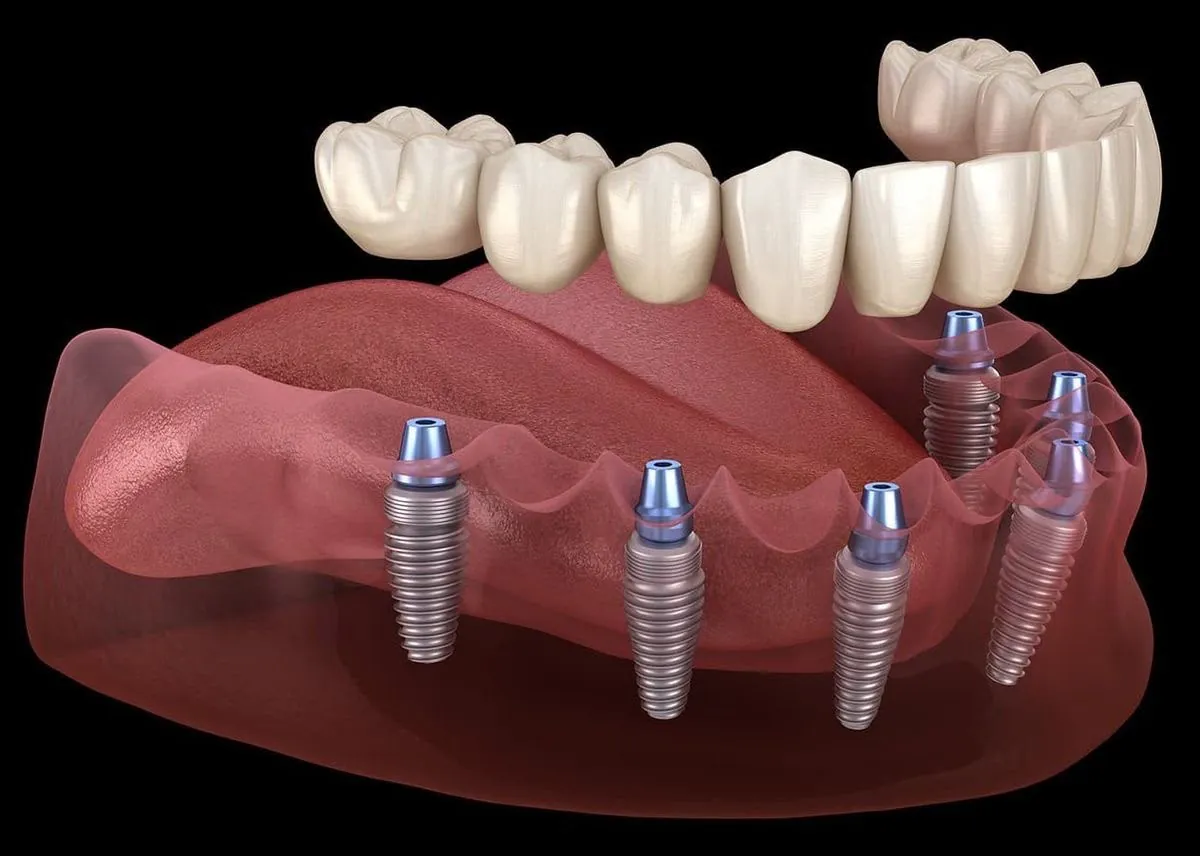
Where many teeth are missing, a whole arch can in suitable cases be held by as few as four implants carrying a fixed bridge. The exact number, and where the implants go, depends on your bone and is part of the plan, not a fixed formula. You can see how it looks on our dental implants page.
Can both jaws be done?
In suitable cases, yes. The upper and lower jaw are planned differently: above, the planning has to take the sinus into account, and below, the nerve. A guided plan keeps the drill clear of both. Whether both arches are treated together or one after the other depends on your health, your bone and what you prefer, and it is worth asking about early.
What decides the quote
We do not quote from a name, and nobody should. These are the things a quote reflects:
- The number of implants the plan needs.
- Whether the bone needs help first. Some jaws need a graft or sinus work before an implant can be placed; many do not.
- The replacement teeth: a single crown, a bridge or a full-arch bridge, and what they are made from.
- Planning and imaging: the 3D scan, the plan and, where used, a surgical guide.
- Temporary teeth while the bone heals, where that is possible in your case.
- Follow-up and the maintenance visits afterwards (How to Maintain Dental Implants Long-Term).
When you compare two implant quotes, make sure they cover the same things.
What the process looks like
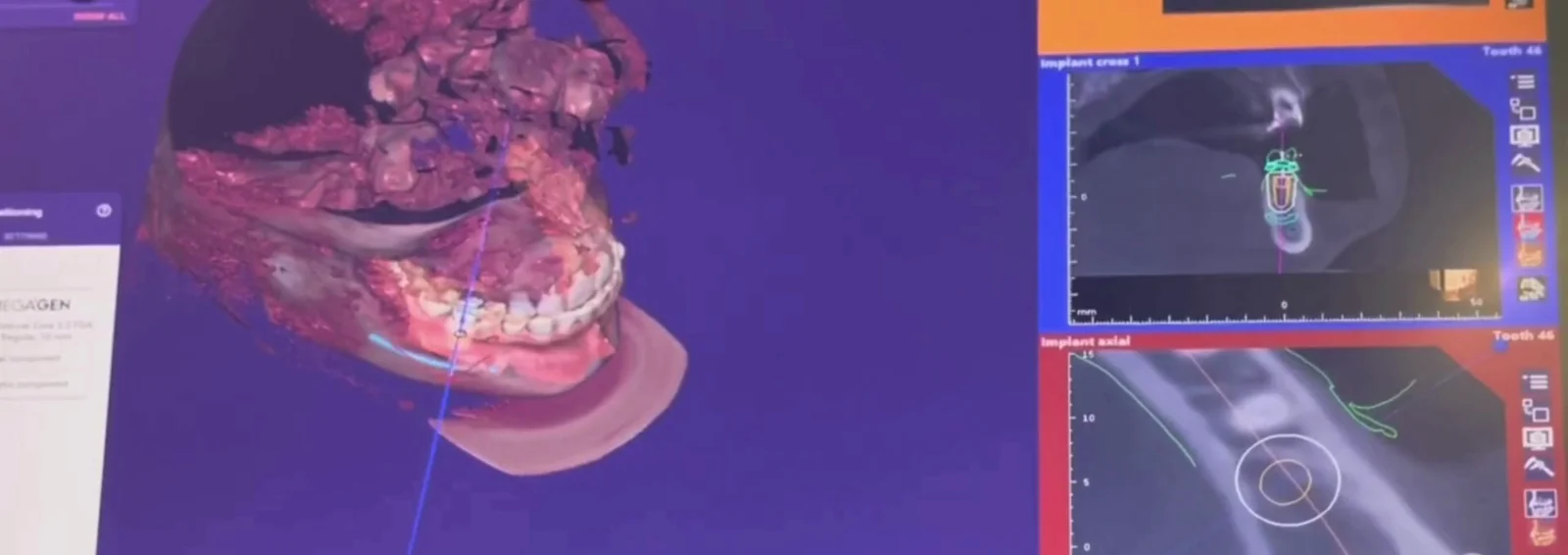
First comes the assessment: an examination, a 3D scan of your teeth and a 3D X-ray of your jaw. The implant positions are planned on screen, so that you see the plan before anything is done. After the implant is placed, the bone needs time to bond with it, which usually takes several months; the final teeth are fitted after that (What Is Osseointegration?). Whether a temporary tooth or bridge is possible during the healing time depends on your case, so ask about it at the start rather than the end.
How to get a useful first answer
If you are abroad or have not yet booked, a recent X-ray sent on WhatsApp gives our team something to work from. It is a starting point only: bone width and height are measured on a 3D scan, and the plan is confirmed after the examination. For what happens on the day, read What to Expect During Dental Implant Surgery.
Not sure whether the stories you have heard about implants are true? Dental Implant Myths goes through them.
To start, book a private consultation or message us on WhatsApp, +961 3 757 127. Dr. Elias Abou Tayeh and the team will talk you through your options, with no pressure.
This article is general information, not a diagnosis. The right treatment, and the result, vary from person to person.