Smile design · 3 min read
A Gap Between Your Front Teeth: Keep It or Close It?
A gap between the front teeth is usually a matter of looks, and sometimes a sign to check your gums. The causes, the five ways to close a gap, and how to choose.
Mineers Smile Center

A gap between the two front teeth is one of the most recognisable features of a smile. Some people love theirs and some want it closed, and both choices are fine. The only part that needs a professional is the question that comes before the choice: why is the gap there?
Is a gap a problem?
Cleveland Clinic calls a gap between teeth diastema, most common between the two upper front teeth. Most healthcare providers see it as a variation of normal dental development, and it usually does not harm your oral health. In children, a gap may close once the adult teeth come in; in permanent teeth, it is less likely to close by itself (Cleveland Clinic).
The exception is a gap that is new, or one that is getting wider. Cleveland Clinic says that can be a sign of gum disease, where infection wears away the bone and the teeth begin to move. If your gums are also red, swollen or sore, or if teeth feel loose, see a dentist before you think about looks. Our guide to bleeding gums explains what to watch for.
Why gaps happen
Many gaps are inherited. The traits that can cause one include missing teeth, teeth that are too small, and a large frenum, the band of tissue between the lip and the gum. Cleveland Clinic also lists regular clenching and swallowing with the tongue pressed against the front teeth, which can push them apart over time.
Five ways to close a gap
| Option | How it closes the gap | Worth knowing |
|---|---|---|
| Composite bonding | Tooth-coloured resin is applied to close the space, then shaped and polished. | On our composite bonding page, it is usually done in one visit with little or no enamel removed. |
| Porcelain veneers | Thin ceramic shells bonded to the front of the teeth close the space. | The ADA says veneers can mask gaps, and that the treatment is not reversible because enamel is removed (ADA MouthHealthy). See porcelain veneers. |
| Aligners or braces | The teeth are moved together. | Cleveland Clinic suggests them for a large gap. The NHS lists large gaps among the reasons for braces (NHS). See clear aligners. |
| Frenectomy | A surgical step releases the band of tissue that holds the teeth apart. | Often done together with bonding or veneers. |
| Replacing a missing tooth | A bridge or an implant fills the space left by a tooth that is not there. | Cleveland Clinic notes that a bridge needs two healthy teeth beside the gap. |
If gum disease is the cause, Cleveland Clinic says it needs treatment first, and only then do you choose whether to close the gap. Our deep cleaning page explains what that treatment involves.
How to choose
Size, cause and what you want from the result matter more than any single rule:
- A small gap, healthy teeth: bonding is often the gentlest start, because it removes little or no tooth, and it is easier to repair if it chips.
- A gap together with other changes you want: veneers can change the width, shape and colour of several teeth at once.
- A larger gap, or crooked teeth beside it: moving the teeth with aligners may suit best, because it moves your natural teeth and does not cover them.
- A gap you are fond of: keep it. Cleveland Clinic points out that many people regard their gap as part of the charm of their smile.
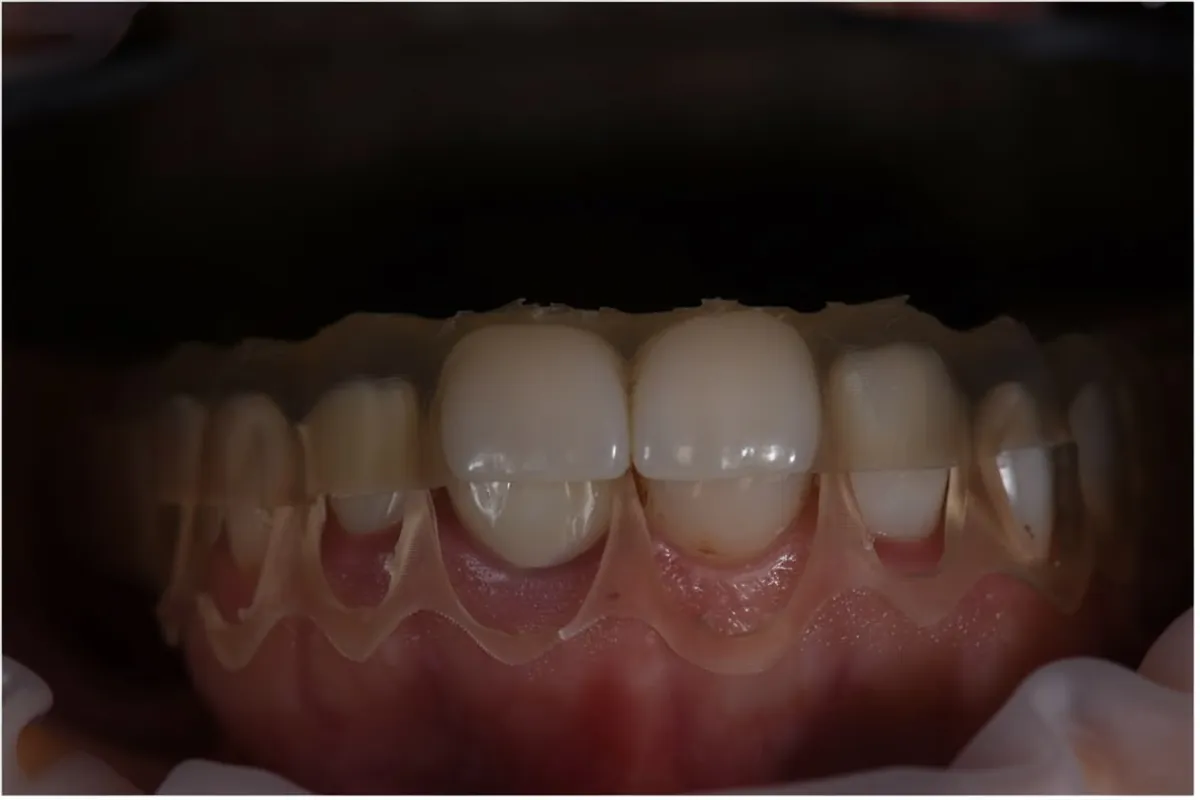
Whatever you choose, ask to see it before any tooth is changed. A 3D-printed mock-up of the design, which we call Testineers, lets you wear the new shape and decide in the mirror; A Smile Preview Is a Plan, Not a Promise explains how to use one. If the gap is closed by moving teeth, plan the retainer from day one: Why You Need a Retainer After Clear Aligners or Braces tells you why.
Not sure which fits your smile? Book a private consultation, or send a photo of your smile on WhatsApp, +961 3 757 127.
This article is general information, not a diagnosis. Treatment plans and results vary from person to person.