Gum health · 5 min read
Gum Disease: From Gingivitis to Periodontitis, Stage by Stage
Gum disease usually starts quietly and is often painless. The stages from gingivitis to periodontitis, the warning signs, how a dentist tells them apart and what treats each stage.
Mineers Smile CenterReviewed by Dr. Elias Abou Tayeh, DDS

Gum disease has a reputation for arriving without warning, and that reputation is fair. The American Dental Association (ADA) says that because gum disease is usually painless, you may not know you have it, and that it is a major cause of tooth loss in adults. The good news is that the earliest stage can be reversed. This guide explains the stages, so you know what to look for and what each one needs.
What gum disease is
The US National Institute of Dental and Craniofacial Research (NIDCR) describes it as an infection that inflames the tissues holding your teeth in place. It is typically caused by plaque, a sticky film of bacteria, building up on the teeth. Plaque that is not removed every day can harden into tartar, and only a professional cleaning by a dentist or hygienist can remove tartar (NIDCR). Plaque and Tartar: What Is the Difference? explains why.
The stages
| Stage | What it is | What you may notice | What treats it |
|---|---|---|---|
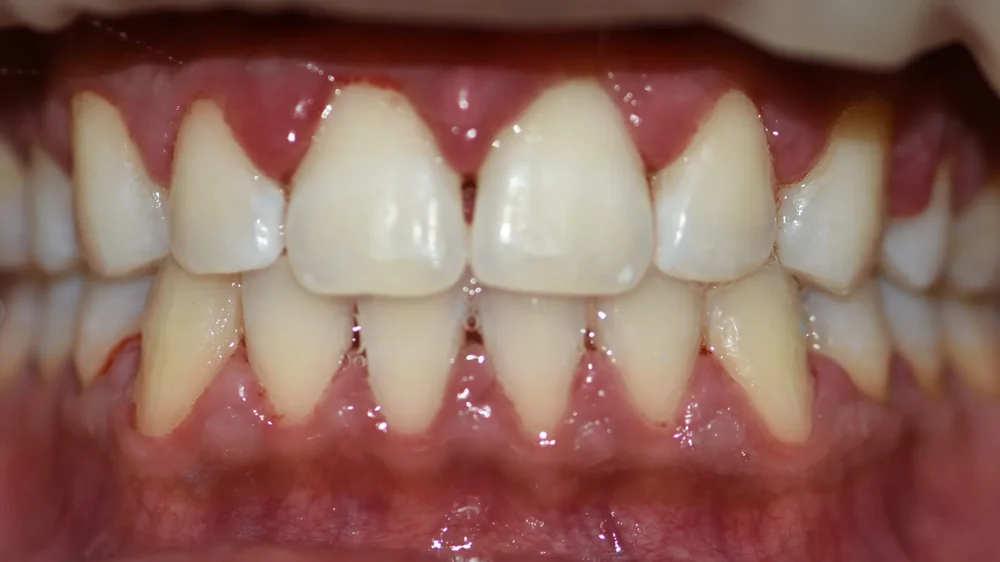
| Gingivitis | The early stage. The ADA says it is still reversible. | Gums that are red, swollen, or bleed easily | A professional cleaning, then daily brushing and flossing (ADA) |
| Periodontitis | Advanced gum disease. Tissue and bone that support the teeth are lost (ADA) | Gums pulling away from the teeth, persistent bad breath, loose or shifting teeth | Treatment by a dentist or hygienist, which may include a deep cleaning called scaling and root planing (NIDCR) |
| Advanced periodontitis | The bone supporting the teeth is destroyed (NIDCR) | Teeth that feel loose and move, a change in how your teeth fit together | Deep cleaning, sometimes surgical treatment, and referral to a specialist (NIDCR) |
The ADA adds that periodontitis usually gets worse slowly, but can have periods of rapid progression, and that an aggressive form can occur in otherwise healthy people. Any bleeding gums deserve a closer look: Bleeding Gums When You Brush covers what they can mean.
Warning signs
The ADA lists signs that can signal a problem:
- gums that have pulled away from the teeth;
- persistent bad breath or a bad taste;
- permanent teeth that are loose or separating;
- any change in the way your teeth fit together when you bite;
- any change in the fit of partial dentures.
It is also possible to have gum disease with no warning signs at all, which is one reason regular check-ups and gum examinations matter.
What raises the risk
NIDCR calls smoking or using tobacco products the most significant risk factor, and says tobacco use can delay healing and make treatment less successful. Other risk factors include older age, diabetes and genetics. The ADA lists smoking or chewing tobacco, crooked teeth that are hard to keep clean, and certain medicines. Smoking, Vaping and Your Smile explains the effects on healing.
How a dentist tells which stage you are at
NIDCR describes the examination. The dentist checks your gums for inflammation, bleeding and gums that have pulled away, and uses a tiny ruler, a probe, to measure the spaces around the teeth. In a healthy mouth, these pockets are usually between 1 and 3 millimetres, and deeper pockets can be a sign of periodontal disease. The dentist also asks about your medical history and may take X-rays, which can show bone loss.
What treatment involves
NIDCR says the main goal is to control the infection, and that the number and type of treatments depends on how far the disease has gone. Early disease caused by plaque can often be reversed by daily brushing and flossing. For periodontal disease, scaling and root planing, a deep cleaning of the affected teeth, may be advised, and surgical treatment may be needed in advanced cases. Any treatment depends on good home care afterwards. Deep Cleaning or a Regular Clean? explains when each is needed.
At Mineers, deep cleaning starts by measuring the gum pocket around every tooth. The signs we list for it are gums pulling away from the teeth, bleeding gums, bad breath that will not go away, and loose teeth. If a specialist's care is needed, we tell you.
What you can do at home
NIDCR's advice is brief and effective: brush twice a day with fluoride toothpaste, clean between your teeth daily (with floss, interdental brushes, picks or a water flosser a dental professional recommends), see the dentist regularly for a check-up and cleaning, and quit all forms of tobacco. Floss, Interdental Brushes or a Water Flosser? helps you choose.
Frequently Asked Questions
Can gum disease be reversed?
The earliest stage, gingivitis, can be, according to the ADA, through a professional cleaning followed by daily brushing and flossing. Once periodontitis has damaged bone, treatment aims to control the infection and stop it getting worse.
Does gum disease hurt?
Often not. The ADA says it is usually painless, which is why bleeding, red gums or bad breath should not be ignored.
What is the difference between gingivitis and periodontitis?
Gingivitis is inflammation of the gums and is still reversible. Periodontitis is the advanced stage, in which tissue and bone supporting the teeth are lost.
Can gum disease make teeth fall out?
Yes, in the worst cases. NIDCR says teeth may become loose or need to be removed. Early treatment is the way to avoid it.
How often should I see a dentist for my gums?
Regularly. How Often Do You Need a Dental Check-up? explains how the interval is decided.
Gums bleeding, or a change you cannot explain? Book a private consultation, or message us on WhatsApp, +961 3 757 127.
This article is general information, not a diagnosis. Treatment plans and results vary from person to person.
Independent sources
Where to read more, from independent health organisations.