Whitening · 5 min read
Whitening or Veneers? It Depends on What You Want to Change
Whitening lightens the colour of natural teeth. Veneers can change colour, shape, size and length too. How to tell which one answers your question, what each cannot do, and when the answer is both.
Mineers Smile Center
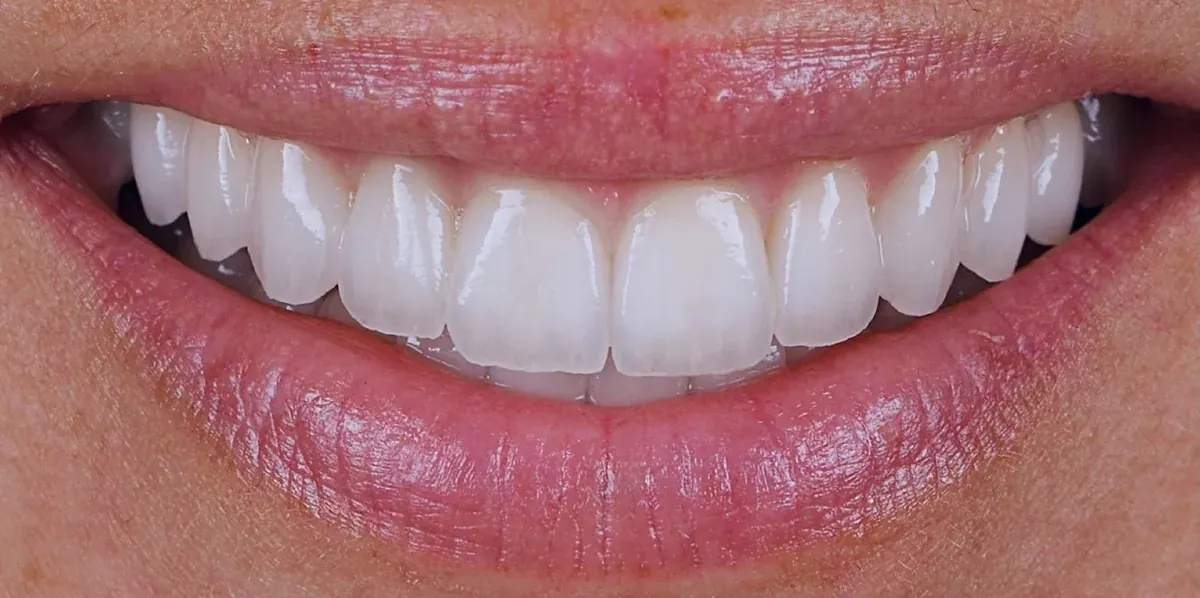
"I want whiter teeth" can lead to two very different treatments. One is a gel that lightens the teeth you already have. The other is a thin shell made for each tooth. Both brighten a smile, which is why people ask about them in the same breath. But they answer different questions, and the quickest way to choose is to ask what you want to change.
The one-line difference
Whitening changes colour, and only colour, on natural teeth. Whitening products contain a bleach, hydrogen peroxide or carbamide peroxide, that breaks stains into smaller pieces and makes the colour less concentrated (ADA MouthHealthy). The NHS puts the limit plainly: whitening can only lighten the colour of natural teeth (NHS).
Veneers cover the front of the tooth. They are custom-made coverings that sit over the front surface of a tooth, and the ADA notes they can also mask gaps in a smile (ADA MouthHealthy). Because they cover what you see, they can change shape, length, size and colour together.
Side by side
| Whitening | Porcelain veneers | |
|---|---|---|
| What it changes | The shade of natural teeth | The shape, length, size and colour of the front teeth |
| What it cannot do | Reshape, lengthen, close gaps or replace a tooth. It does not work on caps, veneers, crowns or fillings | Move teeth, or work on teeth that need treatment first |
| Your own tooth | Not removed. Some temporary sensitivity is possible | A small amount of enamel is removed, so the treatment cannot be reversed |
| If it does not go well | If your teeth turn sensitive, treatment can be delayed and tried again, according to the ADA | Cannot be undone, so the plan should be clear before the first step |
| Afterwards | Not permanent. Stains can build up again | Can chip, crack, wear down or loosen, and may need re-bonding, repair or replacement |
The details vary from person to person. The table is a map, not a diagnosis.
Whitening is worth asking about if...
- Your teeth are the right shape and position, but the shade is dull or yellow. The ADA says yellow teeth will probably bleach well.
- The cause is on the surface. Coffee, tea, red wine and tobacco stains are surface stains (Why Do Teeth Change Colour? explains the difference).
- Your teeth and gums are healthy. The NHS says whitening is not done if the teeth or gums are unhealthy, and that the dentist should check them first.
- You want the least invasive step. Nothing is cut away.
Does Whitening Ruin Your Teeth? answers the common safety worries.
Veneers are worth asking about if...
- Colour is not the only thing you want to change. If it is the shape, the length, a chip, a worn edge or a small gap that bothers you, whitening cannot help, because it only lightens.
- Whitening will not reach the cause. The ADA says whitening may not correct all types of discolouration: brown teeth may not respond as well, and grey-toned teeth may not bleach at all. It also may not work if the colour comes from medicines or an injury. Cleveland Clinic notes that dentists may suggest bonding or veneers for deep discolouration that does not improve with whitening (Cleveland Clinic).
- Several teeth need a change at once. Veneers can be made for a group of front teeth together, while bonding, a gentler option, suits smaller changes (Veneers, Bonding or Clear Aligners compares the three).
Veneers are a bigger decision. The ADA says your dentist must first treat any dental issues such as decay or gum disease, and that veneers may not be a good choice if you clench or grind your teeth or have a deep overbite. Five Questions to Ask Before You Say Yes to Veneers is a good list to take with you.
When the answer is both
Many people want a lighter shade and a better shape. If that is you, the order matters. Whitening does not change veneers, crowns or fillings, so the shade of the natural teeth should be settled first, and the veneers then made to match it (Will My Veneers Look Natural? covers the shade). Whitening after veneers can leave natural teeth lighter than the porcelain.
The same logic applies if you already have crowns, veneers or fillings in the smile zone. They will keep their colour whatever the gel does, so ask how they will be planned around, or replaced to match.
Three questions that usually settle it
- When I look at my smile, is it the colour that bothers me, or the shape, the length or the gaps?
- Do I want to change only the shade, or am I ready for a bigger change that cannot be undone?
- Do I already have crowns, veneers or fillings in the front of my mouth?
If the answers are "colour", "only the shade" and "no", whitening is the place to start. If they are not, an examination will show what suits you.
How we decide at Mineers
We do not choose from a list. We photograph your face and scan your teeth in 3D, and a full check under the microscope comes before any cosmetic work (What Is Digital Smile Design?). If veneers are on the table, you see the design on screen and then wear a printed mock-up, Testineers, over your own teeth, before any tooth is prepared (A Smile Preview Is a Plan, Not a Promise). Sometimes the right answer is a simpler treatment than the one you came in asking about, and sometimes it is none.
Not sure which one fits you? Book a private consultation and we will tell you honestly what is possible, or send a few clear photos of your smile on WhatsApp, +961 3 757 127.
This article is general information, not a diagnosis. Treatment plans and results vary from person to person.